



X Close

New report exposes fallacy of UK Net Zero target

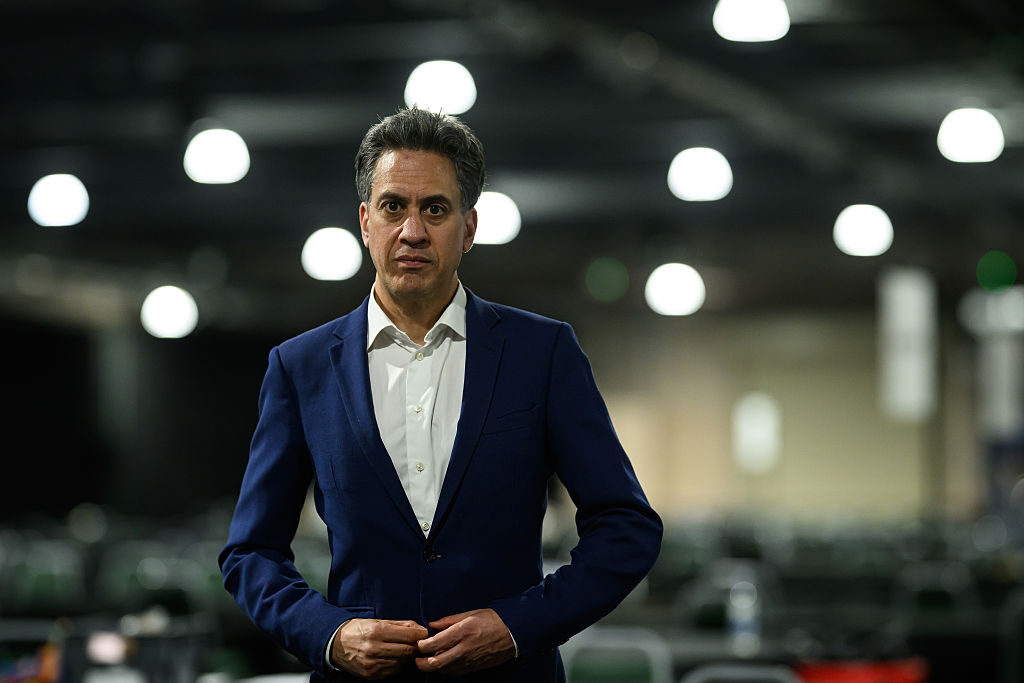
Energy Secretary Ed Miliband wants Britain to become a global 'climate leader'. Credit: Getty

Energy Secretary Ed Miliband wants Britain to become a global 'climate leader'. Credit: Getty

May 18 2025 - 1:00pm

The Conservative Party’s retreat from the commitment it made while in office to impose a “Net Zero” UK energy system by 2050 continues apace. On Monday evening it will take another stride when Lord Offord, the Shadow Energy Minister in the House of Lords, presents a report which examines whether this goal is realistic. Spoiler alert: the report, titled The True Affordability of Net Zero and authored by leading energy consultant Kathryn Porter, concludes that it very much isn’t.

Tory leader Kemi Badenoch has already suggested the target is “impossible” without “a serious drop in our living standards or by bankrupting us”. Porter’s study contains a mass of detailed analysis which supports that claim, while casting doubt on assertions made by Energy Secretary Ed Miliband.

Labour went into the last election promising average household energy bills would fall by £300, yet they have already increased by almost exactly this amount — and are set to rise much further. Miliband has tried to blame this on the volatile price of natural gas and Britain’s dependence on fossil fuel markets controlled by “petrostates and dictators”.

But, according to Porter, gas is not the reason why Britain’s industrial users pay more for their electricity than competitors abroad, or why our household electricity bills are the world’s fourth highest. Instead, this is down to a series of “policy choices” made since the country embarked on the green “energy transition”, including ever-deepening thickets of levies, taxes and subsidies. After all, the UK gas price is only the world’s 15th highest, and has risen much less than total bills.

Energy has become a critical political battleground, perhaps second only to immigration. Reform UK has already announced it would abandon the Net Zero ambition, as well as Miliband’s further goal of “clean power” — an electricity system that relies on fossil fuels for just 5% of its output — by 2030. Yet despite Reform’s recent gains, Miliband has said he is “absolutely up for the fight” to defend his project, and still maintains it will save money. There have been signs of dissent among Labour MPs who fear that Net Zero could cost them Red Wall seats, but the Energy Secretary maintains that abandoning the policy would represent a “total betrayal of future generations”.

Standing in Miliband’s way are some inconvenient truths. Even the Climate Change Committee (CCC), the quango he appoints to set the so-called carbon budgets which are supposed to get us to that 2050 goal, says that cost savings from the Net Zero path will only begin from 2038. What’s more, as Porter’s report points out, some of its assumptions appear to have no basis in fact.

For example, the CCC claims that the cost of offshore wind energy is falling, and will fall further. In fact, it is rising steeply. The “contracts for difference” for new offshore windfarms Miliband signed amid much fanfare last year guarantee their owners will be paid £83 for each MWh unit of electricity. Yet the price set out in contracts signed in 2022 was just £52 per unit. Happily for the contractors, the system allowed those who signed them to “rebid” for them in 2024 at new, more lucrative levels. This difference will be added to bills.

Meanwhile, the owners of the huge new Seagreen wind farm off the coast of Scotland were paid twice as much last year not to supply power as they had been for selling electricity, because the grid infrastructure could not cope. Switching Seagreen off cost $198 million: another addition to bills.

These and other expensive anomalies were created while the Tories were in power. However, Conservative sources tell me that the green enthusiasm which dominated the party under David Cameron and Boris Johnson has well and truly dissipated. Miliband’s claim that if Britain becomes a “climate leader” the rest of the world will enviously follow suit is also widely dismissed. Instead, as India, the US and China continue to burn more fossil fuels, the British Government is likely to wreck the economy, exporting jobs to high-emitting countries but in doing so increasing global greenhouse gas.

“The Conservative Party is going through a thorough renewal of its energy policy under Kemi Badenoch’s leadership,” Lord Offord informed me. “This report spells out the scale of the challenges we face” and “provides further evidence that the government’s Clean Power 2030 plan is neither achievable nor affordable.”

Tory sources say the party is careful not to issue firm commitments at this stage, for it is far from clear what state the energy system will be in when Britain next goes to the polls, and what might have to be done to get it back on track. But the political stakes are spelled out in Porter’s conclusion: that Labour’s hopes of economic growth cannot be achieved while the UK has such high energy prices. Net Zero, she writes, “represents a significant drag on the economy” and is “creating real hardship.”


David Rose is UnHerd‘s Investigations Editor.

DavidRoseUK

China is threatening America in the AI race

Reports sugget Zhipu AI  has released a new model that can rival leading US systems. Credit: Getty

Reports sugget Zhipu AI has released a new model that can rival leading US systems. Credit: Getty

July 1 2026 - 10:18am

China is trying to catch up with America on artificial intelligence. The Wall Street Journal has reported that Zhipu AI — one of China’s six “AI tiger” LLMs — has released a new model that can rival leading US systems, including Anthropic’s Mythos, in cybersecurity tasks such as pinpointing security bugs. While this marks a milestone in China’s drive to catch up with Western AI capabilities, strong performance on a single benchmark does not mean it has taken the lead. Chinese models still lag behind their Western counterparts in broader capabilities, such as autonomous operation. Skepticism is therefore warranted before resorting to hysterical conclusions, but complacency about the geopolitical implications of China’s AI advances would be an even greater mistake.

On the infrastructure side, Chinese AI is still constrained by access to advanced chips, with American labs way ahead in computing capacity as well as investment. Analysis from earlier this year suggests that Chinese models are likely to be at least a few months behind those in the US. But they are still continuing to make progress, or that the geopolitical importance of AI will be decided only by whose LLM has ventured deeper into the technological frontier. The practical applications of AI, countries’ to capture foreign markets, and the application of AI into the real economy will matter just as much.

Here, China may hold an advantage. As with its dominance across many critical supply chains, Beijing may not need to produce the most advanced AI systems — only those that are affordable and widely deployable. In doing so, it could consolidate global influence by supplying functional, low-cost AI at scale.

Beijing seems to be pursuing exactly that path, developing an AI “open-source” strategy that offers affordable, widely available AI models for companies and individuals to use and modify as they wish. The production of the DeepSeek AI model, which matched the performance of Silicon Valley tools such as ChatGPT at a fraction of the cost for users, created goodwill among Chinese models with developers.

The four most popular models on OpenRouter, an AI hardware platform for developers, are now all Chinese. The goal for China is not only to win the frontier-model race, but to make its systems the default layer of AI adoption across industries and global markets. For most economies, the choice is increasingly between an affordable tool they can deploy now and a more robust one that may be out of reach.

And while the countries adopting Chinese models may be exposed to political pressure and cyber threats from Beijing, safer and more capable alternatives matter little if they are unaffordable. American AI companies are already under pressure to monetize products whose operating costs are rising. If Chinese open-source models become the cheap default for startups, universities, governments and businesses across the developing world, then America’s AI lead will be eroded from below.

Perhaps more concerning for America in the long run is how AI can give Chinese manufacturing even more strength, through the ongoing integration of AI as a general-purpose technology. China’s new Five-Year Plan mentioned AI more than 50 times and includes an “AI+” action plan aimed at spreading AI across the economy.

Beijing has been pioneering automation of its critical infrastructure for years, with promising recent results in increasing warplane production capacity. In that regard, China’s open-model strategy and manufacturing dominance will reinforce each other. Cheap, adaptable models accelerate deployment across the real economy while those deployments generate real-world data and use cases that can feed back into further model improvement.

The United States should not dismiss the importance of its lead in the AI race. That lead worries Beijing, not least because a more automated Chinese economy would also become more vulnerable to AI-generated cyber threats. But nor should Washington assume that China cannot catch up with American capabilities over time.

This AI competition represents part of a broader struggle over tech supply chains and geopolitical influence. Decisions over whether to adopt US or Chinese models could produce a more fragmented global reality, with different regions relying on different cloud providers, chips and security structures. The result will likely be a global economy which is divided into competing spheres, rather than one which produces a single winner.


Miquel Vila is a political and geopolitical risk consultant focusing on industrial strategy, critical infrastructure and global supply chains.

miquelvilam
