






 Prefer us on Google

April 24 2025 - 7:00pm
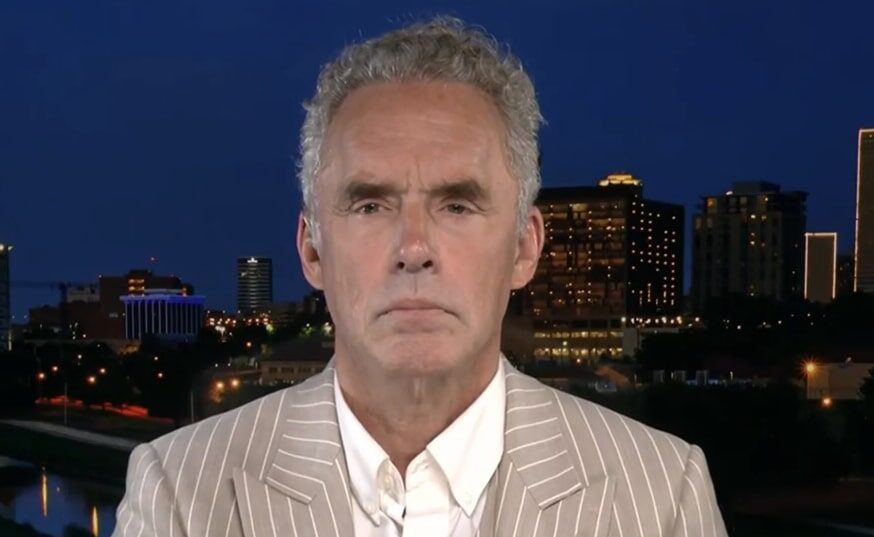
Few public intellectuals have turned psychology into a shield against criticism as ruthlessly as Jordan Peterson. When the Canadian author appeared on Sean Hannity’s Fox show this week, he offered a clinical diagnosis of his online critics: these people — many of whom share their views anonymously — aren’t making claims worthy of debate or even wrong, in Peterson’s view, but instead suffer from serious personality disorders.
Peterson, one of several co-authors of a Network Contagion Research Institute report on “how online extremists hijacked ‘Christ Is King’”, has long been critical of online anonymity. The NCRI report addresses anonymous accounts alongside named figures such as commentator Candace Owens and far-Right activist Nick Fuentes, grouping them together as antisemitic “extremists” and “conspiracy mongers”.
This approach mirrors Peterson’s 2022 campaign against anonymous social media users, when he argued that platforms were “enabling sadistic Machiavellian psychopaths and narcissists” by failing to identify “anonymous cowardly troll demons”. In 2023, when Elon Musk defended anonymous users’ right to express controversial views, Peterson insisted that anonymity primarily serves “Dark Tetrad [personality] types” rather than legitimate discourse. His current focus on depicting the targets of the NCRI report as “psychopathic narcissistic types” and “religious pretenders” represents the culmination of this crusade, effectively dismissing opponents by framing them as having psychological disorders rather than being serious critics worthy of engagement.
Recasting ideological disagreement as psychological pathology is a well-established pattern for Peterson. When appearing on Joe Rogan’s podcast earlier this week, the psychologist expanded his diagnosis to what some have labelled the “woke Right” — a group he frames not as political actors but “psychopathic types” exploiting conservatism for personal gain. Interestingly, this echoes Peterson’s critiques of the Left. He has characterised transgender activism as being rooted in mental disorder, and has described gender-affirming care as “Nazi medical experiment-level wrong”.
The NCRI report focuses mainly on pathological conflicts within the Right, accusing public figures including Owens and Fuentes of co-opting religious language for extremist purposes. Yet Peterson’s broad application of psychological diagnosis to anonymous critics misses substantive critiques of his own positions. Transgender activists such as Lane Patriquin have directly argued against Peterson that “isolation, discrimination, familial rejection, and compounded forms of oppression” are the real causes of trans suffering, not inherent mental illness. Peterson never meaningfully engaged with this argument, instead consistently framing gender identity issues as manifestations of psychological dysfunction that he, with his clinical expertise, is uniquely positioned to diagnose.
This credentialism enables Peterson to avoid substantively debating opposing claims. What’s more, his dismissive approach threatens the very anonymity that enables such critiques in the first place. While the NCRI report singles out high-profile anonymous accounts like “trad_west_” and “CensoredMen”, the vast majority of anonymous internet users aren’t influencers but ordinary people who benefit from protection from professional repercussions when critiquing powerful figures. Surely Peterson, who himself found fame when he was targeted for taking a stand against the overreaching human rights-oriented Bill C16 in Canada, understands that some genuinely require online anonymity.
Medical and psychological establishments have long recognized the danger of such armchair diagnoses. After psychiatrists publicly questioned Barry Goldwater’s mental fitness during his 1964 presidential campaign, the American Psychiatric Association created the “Goldwater Rule”, formally discouraging doctors from offering public diagnoses of people they haven’t examined. As social psychologist Jonathan Haidt has documented, extremely conservative viewpoints are frequently dismissed in academic settings not as valid intellectual positions but as evidence of flawed thinking or moral failings. Yet Peterson’s psychological pathologizing of both transgender activists and now the “woke Right” mirrors exactly the thing he’s long criticized within academic departments.
This isn’t to suggest all criticism is valid or all critics well-intentioned. Bad-faith actors exist online in considerable numbers. But Peterson’s apparent solution creates a circular logic where criticism becomes evidence of the critic’s pathology, which in turn validates dismissing the argument. This temptation has proven irresistible even to those who, like Peterson, ostensibly built their reputations championing reasoned debate.
Oliver Bateman is a historian and journalist based in Pittsburgh. He blogs, vlogs, and podcasts at his Substack, Oliver Bateman Does the Work
 MoustacheClubUS