




X Close

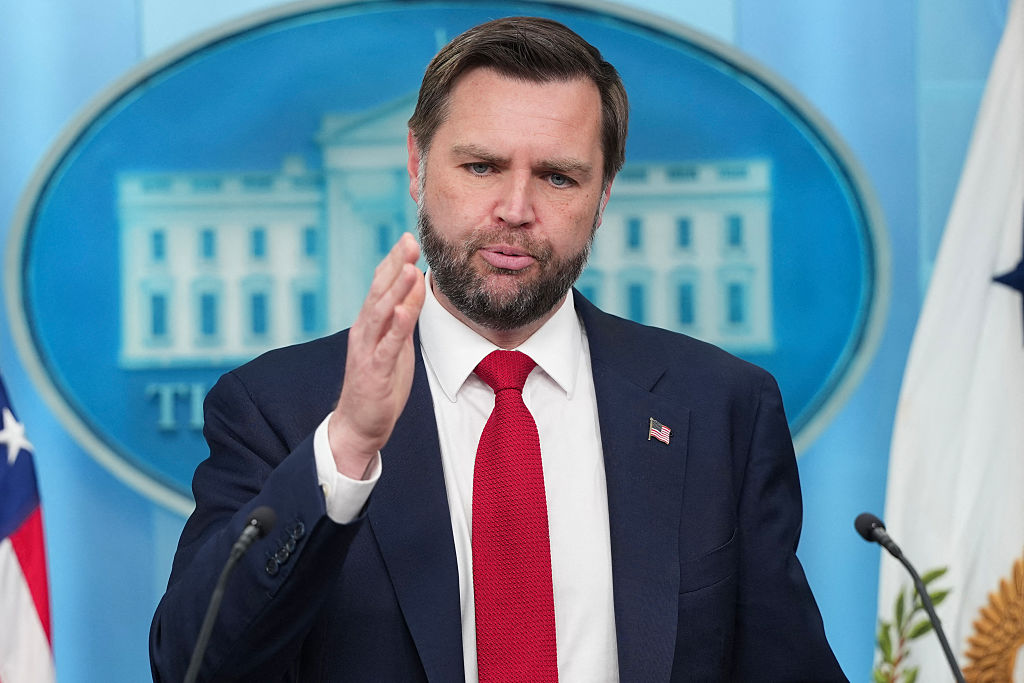
JD Vance: Israel is panicking over Iran deal misinformation

Vance warned of misinformation surrounding the deal. Credit: Getty

Vance warned of misinformation surrounding the deal. Credit: Getty

June 18 2026 - 6:30pm

US Vice President JD Vance has said the Israeli reaction to the emerging US–Iran deal is being driven in part by “misinformation” about its terms.

In an interview with New York Times columnist Ross Douthat, Vance defended the agreement as a pragmatic response to shifting regional conditions, and said opposition within Israel is coming from an incomplete reading of the framework.

“Large segments of the Israeli political system and population are very sensitive about this deal,” Vance said. “But I also think they’re picking up on some misinformation about the deal and running with it and sort of panicking about it.”

Earlier today, Vance went further, warning Israel: “If I was in the cabinet of the Israeli government, I might not be attacking the only powerful ally that I have left anywhere in the entire world,” he said. “Bibi, to his credit, has not gone down this path.”

His comments come as US President Donald Trump formally signed a memorandum of understanding in Versailles, France last night. It set out a 60-day ceasefire window, intended to allow time for further negotiations on a comprehensive settlement. The framework includes commitments to ensure the full reopening of the Strait of Hormuz to commercial shipping, as well as the termination of military operations on all fronts, including Lebanon. The agreement also states that Iran will not develop nuclear weapons and outlines a mechanism for addressing Iran’s stockpile of enriched uranium under International Atomic Energy Agency (IAEA) supervision.

The memorandum allows for potential economic provisions, including the possibility of a large-scale reconstruction and development fund for Iran, and a phased process for lifting US sanctions if a final deal is reached. The US, meanwhile, would begin easing certain restrictions on Iranian oil exports and financial transactions during the interim period.

The deal is not legally binding and both sides retain the right to withdraw before a final agreement is reached. US officials have stressed that implementation will be closely monitored and that sanctions relief is conditional on verified compliance.

In Israel, the reaction to the agreement has swung from surprise to outright anger. “It’s a bad agreement in which the Americans are paying with cash, and got, at the maximum, a letter of intent,” said Yaakov Amidror, a former national security adviser to Israeli Prime Minister Benjamin Netanyahu. Elsewhere, Times of Israel editor David Horovitz described it as a “catastrophic capitulation”, while one primetime TV host called the Vice President a “scumbag”. Netanyahu and other senior officials in his government are yet to comment on the agreement.

In his interview, Vance argued that the agreement represents a more favorable position for the US compared with earlier frameworks, including the 2015 nuclear accord negotiated under the Obama administration. He said Iran is now operating from a position of “greater weakness” following sustained military pressure and economic strain.

He also emphasized that any economic benefits for Tehran, including potential access to international investment or frozen assets, would be contingent on behavioral change and verification of compliance. “If Iran actually does all the things that they’re telling you,” Vance said, “that would be a home run deal.”

Pushing back on concerns that Iran could exploit the agreement to rebuild capabilities or finance regional proxies, Vance claimed that the US retains sufficient leverage through sanctions and enforcement mechanisms.

“I fundamentally believe this deal will be good for the entire region and for the world,” he said. “That includes, of course, the Israelis.”


James Billot is UnHerd’s Newsroom editor.

james_billot

China is threatening America in the AI race

Reports sugget Zhipu AI  has released a new model that can rival leading US systems. Credit: Getty

Reports sugget Zhipu AI has released a new model that can rival leading US systems. Credit: Getty

July 1 2026 - 10:18am

China is trying to catch up with America on artificial intelligence. The Wall Street Journal has reported that Zhipu AI — one of China’s six “AI tiger” LLMs — has released a new model that can rival leading US systems, including Anthropic’s Mythos, in cybersecurity tasks such as pinpointing security bugs. While this marks a milestone in China’s drive to catch up with Western AI capabilities, strong performance on a single benchmark does not mean it has taken the lead. Chinese models still lag behind their Western counterparts in broader capabilities, such as autonomous operation. Skepticism is therefore warranted before resorting to hysterical conclusions, but complacency about the geopolitical implications of China’s AI advances would be an even greater mistake.

On the infrastructure side, Chinese AI is still constrained by access to advanced chips, with American labs way ahead in computing capacity as well as investment. Analysis from earlier this year suggests that Chinese models are likely to be at least a few months behind those in the US. But they are still continuing to make progress, or that the geopolitical importance of AI will be decided only by whose LLM has ventured deeper into the technological frontier. The practical applications of AI, countries’ to capture foreign markets, and the application of AI into the real economy will matter just as much.

Here, China may hold an advantage. As with its dominance across many critical supply chains, Beijing may not need to produce the most advanced AI systems — only those that are affordable and widely deployable. In doing so, it could consolidate global influence by supplying functional, low-cost AI at scale.

Beijing seems to be pursuing exactly that path, developing an AI “open-source” strategy that offers affordable, widely available AI models for companies and individuals to use and modify as they wish. The production of the DeepSeek AI model, which matched the performance of Silicon Valley tools such as ChatGPT at a fraction of the cost for users, created goodwill among Chinese models with developers.

The four most popular models on OpenRouter, an AI hardware platform for developers, are now all Chinese. The goal for China is not only to win the frontier-model race, but to make its systems the default layer of AI adoption across industries and global markets. For most economies, the choice is increasingly between an affordable tool they can deploy now and a more robust one that may be out of reach.

And while the countries adopting Chinese models may be exposed to political pressure and cyber threats from Beijing, safer and more capable alternatives matter little if they are unaffordable. American AI companies are already under pressure to monetize products whose operating costs are rising. If Chinese open-source models become the cheap default for startups, universities, governments and businesses across the developing world, then America’s AI lead will be eroded from below.

Perhaps more concerning for America in the long run is how AI can give Chinese manufacturing even more strength, through the ongoing integration of AI as a general-purpose technology. China’s new Five-Year Plan mentioned AI more than 50 times and includes an “AI+” action plan aimed at spreading AI across the economy.

Beijing has been pioneering automation of its critical infrastructure for years, with promising recent results in increasing warplane production capacity. In that regard, China’s open-model strategy and manufacturing dominance will reinforce each other. Cheap, adaptable models accelerate deployment across the real economy while those deployments generate real-world data and use cases that can feed back into further model improvement.

The United States should not dismiss the importance of its lead in the AI race. That lead worries Beijing, not least because a more automated Chinese economy would also become more vulnerable to AI-generated cyber threats. But nor should Washington assume that China cannot catch up with American capabilities over time.

This AI competition represents part of a broader struggle over tech supply chains and geopolitical influence. Decisions over whether to adopt US or Chinese models could produce a more fragmented global reality, with different regions relying on different cloud providers, chips and security structures. The result will likely be a global economy which is divided into competing spheres, rather than one which produces a single winner.


Miquel Vila is a political and geopolitical risk consultant focusing on industrial strategy, critical infrastructure and global supply chains.

miquelvilam