



X Close

Europe will regret seizing frozen Russian assets

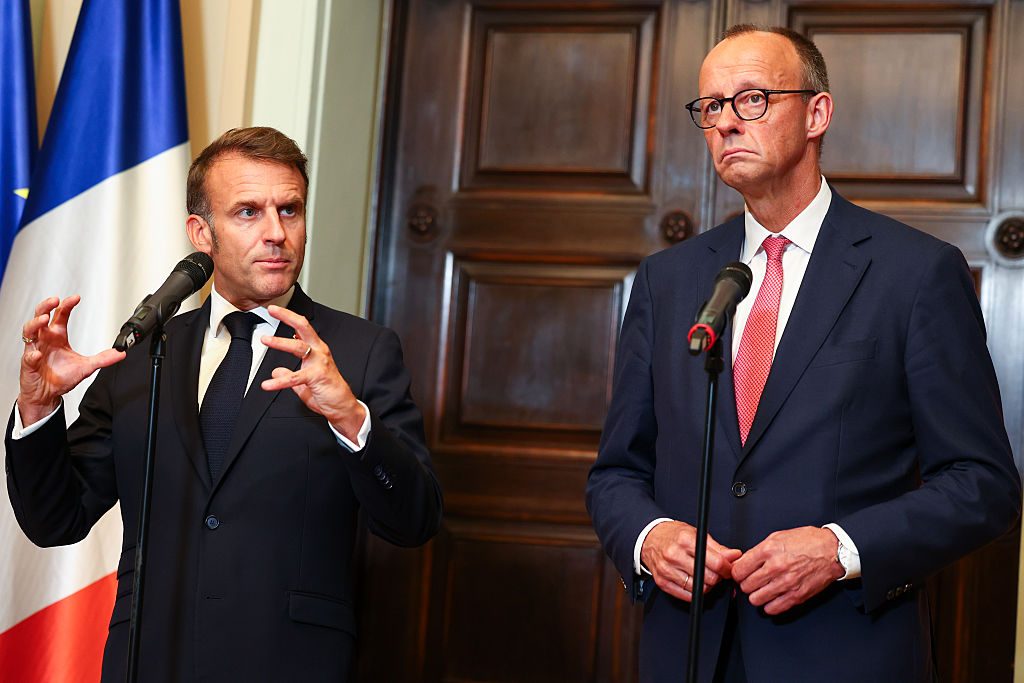
European leaders have become increasingly in favour of the move. Credit: Getty

European leaders have become increasingly in favour of the move. Credit: Getty

September 28 2025 - 1:00pm

Of all the sanctions deployed against Russia over the past three years, none was as radical or unprecedented as the freezing of Moscow’s foreign-exchange reserves, worth around $300 billion — about half of its overall reserves. Washington had previously frozen the assets of weaker adversaries such as Afghanistan, Iran, Syria, and Venezuela. But none of these countries remotely matched Russia’s stature: a G20 economy and the world’s largest nuclear power. Nor had any of the 63 central banks belonging to the Bank for International Settlements (BIS) in Basel — often described as the “central bank of central banks” — ever been subjected to such measures, not even during the Second World War.

The freeze upended what had long been considered a sacred principle of international finance: the neutrality of central bank reserves. Despite this, Brussels is now preparing to double down. Until now, Russia’s reserves have remained frozen but untouched. But pressure is building inside the EU to go further — to actually use these funds. Roughly €200 billion of the immobilized assets are held at Euroclear, the Brussels-based clearing house. German Chancellor Friedrich Merz this week called on the EU to seize these reserves and channel them into Ukraine’s war effort. His proposal, unveiled in the Financial Times, envisions using the assets to unlock a €140 billion loan for Kyiv.

This represents a striking reversal for Berlin. For years, Germany — along with several other EU members — had rejected outright confiscation of the assets, warning that it could jeopardize the euro’s credibility as a reserve currency and risk provoking dangerous escalation from Moscow. But with Washington under Donald Trump scaling back support for Ukraine, European leaders fear they may soon be left to carry the burden alone. Merz’s U-turn reflects this shift.

The proposed mechanism is complex. Member states would first guarantee the loan before anchoring repayment in the EU’s next long-term budget, beginning in 2028. Merz has suggested the plan should be adopted by a “large majority”, implying a structure that avoids unanimity and thus neutralizes the vetoes of Hungary or Slovakia. But not all opposition comes from the bloc’s usual dissenters.

Belgium itself has little enthusiasm for the plan. The reason is straightforward: Euroclear’s profits from the immobilized Russian assets are already being taxed at 25% by the Belgian government, which is using the resulting windfall to help finance its own defense spending in line with Nato’s 2% of GDP target. Handing control of the funds to Brussels would deprive Belgium of this revenue stream. This highlights the internal contradictions of the EU’s position. While Brussels frames the debate in terms of solidarity with Ukraine and the defense of European sovereignty, national governments are not blind to the fiscal and financial interests at stake.

The consequences of Merz’s proposal would be far-reaching. Beyond prolonging an unwinnable war — with all its destruction and loss of life — it would further erode confidence in Europe’s currency and financial institutions. As Belgium’s Prime Minister Bart De Wever bluntly warned this week: “If countries see that central bank money can disappear when European politicians see fit, they might decide to withdraw their reserves from the eurozone”.

This is not a theoretical risk. Central banks around the world already begun shifting away from Western currencies after the 2022 freeze. Confiscation would only accelerate this trend. The euro, already a secondary reserve currency behind the dollar, could see its status diminished further if investors and governments view it as vulnerable to political whims.

What European leaders present as a show of strength is likely to prove to be yet another spectacular act of self-sabotage. It will further weaken the West’s position through the alienation of the Global South, the emboldening of alternative financial systems and the erosion of trust in the euro itself.


Thomas Fazi is an UnHerd columnist and translator. His latest book is The Covid Consensus, co-authored with Toby Green.

battleforeurope

China is threatening America in the AI race

Reports sugget Zhipu AI  has released a new model that can rival leading US systems. Credit: Getty

Reports sugget Zhipu AI has released a new model that can rival leading US systems. Credit: Getty

July 1 2026 - 10:18am

China is trying to catch up with America on artificial intelligence. The Wall Street Journal has reported that Zhipu AI — one of China’s six “AI tiger” LLMs — has released a new model that can rival leading US systems, including Anthropic’s Mythos, in cybersecurity tasks such as pinpointing security bugs. While this marks a milestone in China’s drive to catch up with Western AI capabilities, strong performance on a single benchmark does not mean it has taken the lead. Chinese models still lag behind their Western counterparts in broader capabilities, such as autonomous operation. Skepticism is therefore warranted before resorting to hysterical conclusions, but complacency about the geopolitical implications of China’s AI advances would be an even greater mistake.

On the infrastructure side, Chinese AI is still constrained by access to advanced chips, with American labs way ahead in computing capacity as well as investment. Analysis from earlier this year suggests that Chinese models are likely to be at least a few months behind those in the US. But they are still continuing to make progress, or that the geopolitical importance of AI will be decided only by whose LLM has ventured deeper into the technological frontier. The practical applications of AI, countries’ to capture foreign markets, and the application of AI into the real economy will matter just as much.

Here, China may hold an advantage. As with its dominance across many critical supply chains, Beijing may not need to produce the most advanced AI systems — only those that are affordable and widely deployable. In doing so, it could consolidate global influence by supplying functional, low-cost AI at scale.

Beijing seems to be pursuing exactly that path, developing an AI “open-source” strategy that offers affordable, widely available AI models for companies and individuals to use and modify as they wish. The production of the DeepSeek AI model, which matched the performance of Silicon Valley tools such as ChatGPT at a fraction of the cost for users, created goodwill among Chinese models with developers.

The four most popular models on OpenRouter, an AI hardware platform for developers, are now all Chinese. The goal for China is not only to win the frontier-model race, but to make its systems the default layer of AI adoption across industries and global markets. For most economies, the choice is increasingly between an affordable tool they can deploy now and a more robust one that may be out of reach.

And while the countries adopting Chinese models may be exposed to political pressure and cyber threats from Beijing, safer and more capable alternatives matter little if they are unaffordable. American AI companies are already under pressure to monetize products whose operating costs are rising. If Chinese open-source models become the cheap default for startups, universities, governments and businesses across the developing world, then America’s AI lead will be eroded from below.

Perhaps more concerning for America in the long run is how AI can give Chinese manufacturing even more strength, through the ongoing integration of AI as a general-purpose technology. China’s new Five-Year Plan mentioned AI more than 50 times and includes an “AI+” action plan aimed at spreading AI across the economy.

Beijing has been pioneering automation of its critical infrastructure for years, with promising recent results in increasing warplane production capacity. In that regard, China’s open-model strategy and manufacturing dominance will reinforce each other. Cheap, adaptable models accelerate deployment across the real economy while those deployments generate real-world data and use cases that can feed back into further model improvement.

The United States should not dismiss the importance of its lead in the AI race. That lead worries Beijing, not least because a more automated Chinese economy would also become more vulnerable to AI-generated cyber threats. But nor should Washington assume that China cannot catch up with American capabilities over time.

This AI competition represents part of a broader struggle over tech supply chains and geopolitical influence. Decisions over whether to adopt US or Chinese models could produce a more fragmented global reality, with different regions relying on different cloud providers, chips and security structures. The result will likely be a global economy which is divided into competing spheres, rather than one which produces a single winner.


Miquel Vila is a political and geopolitical risk consultant focusing on industrial strategy, critical infrastructure and global supply chains.

miquelvilam
