




X Close

DOGE deserves credit for 40,000 federal worker departures

So far, so good. Credit: Getty

So far, so good. Credit: Getty

February 6 2025 - 8:00pm

Donald Trump’s Department of Government Efficiency (DOGE) has achieved something remarkable: convincing tens of thousands of federal employees to voluntarily resign. While falling well short of the administration’s ambitious target of 100,000 to 200,000 departures, these 40,000 resignations represent the largest voluntary exodus from federal service in American history. Even as the White House denies reports that it’s drafting orders to cut thousands more workers from health agencies, America’s vast bureaucratic apparatus is facing one of the biggest shake-ups in its history.

The innovation — and potential danger — of this voluntary resignation program lies in its circumvention of America’s robust civil service protections. The administration has effectively created a two-track approach: pursue controversial reclassifications through Schedule F (his attempt, based on a 2020 executive order, to strip job protections from civil servants by reclassifying them as “policy-making” positions) while simultaneously incentivizing departures through voluntary resignations so there are fewer legal headaches. In doing so, the administration has changed the cultural perception of federal employment from “safe career” to something more temporary — a psychological transformation that may prove more consequential than the actual number of departures.

Previous attempts at federal workforce reduction, including Trump’s first-term efforts, crumbled in the face of legal challenges. But these departures show how carefully structured voluntary programs can achieve what direct confrontation cannot. While unions and advocacy groups are mounting fresh legal challenges to Trump’s attempt to strip employment protections— with the National Treasury Employees Union and PEER already filing suits over due process violations — they have far fewer options when workers choose to leave.

However, there is still a huge amount of uncertainty with the scheme. Career coaches report their clients wrestling with basic questions: can they take other jobs during this period? And will they maintain access to retirement benefits? For some, this makes the deal less attractive. But others, particularly those close to retirement or extremely burned out on the work, may see an opportunity: essentially paid job-search time with none of the usual restrictions of federal service.

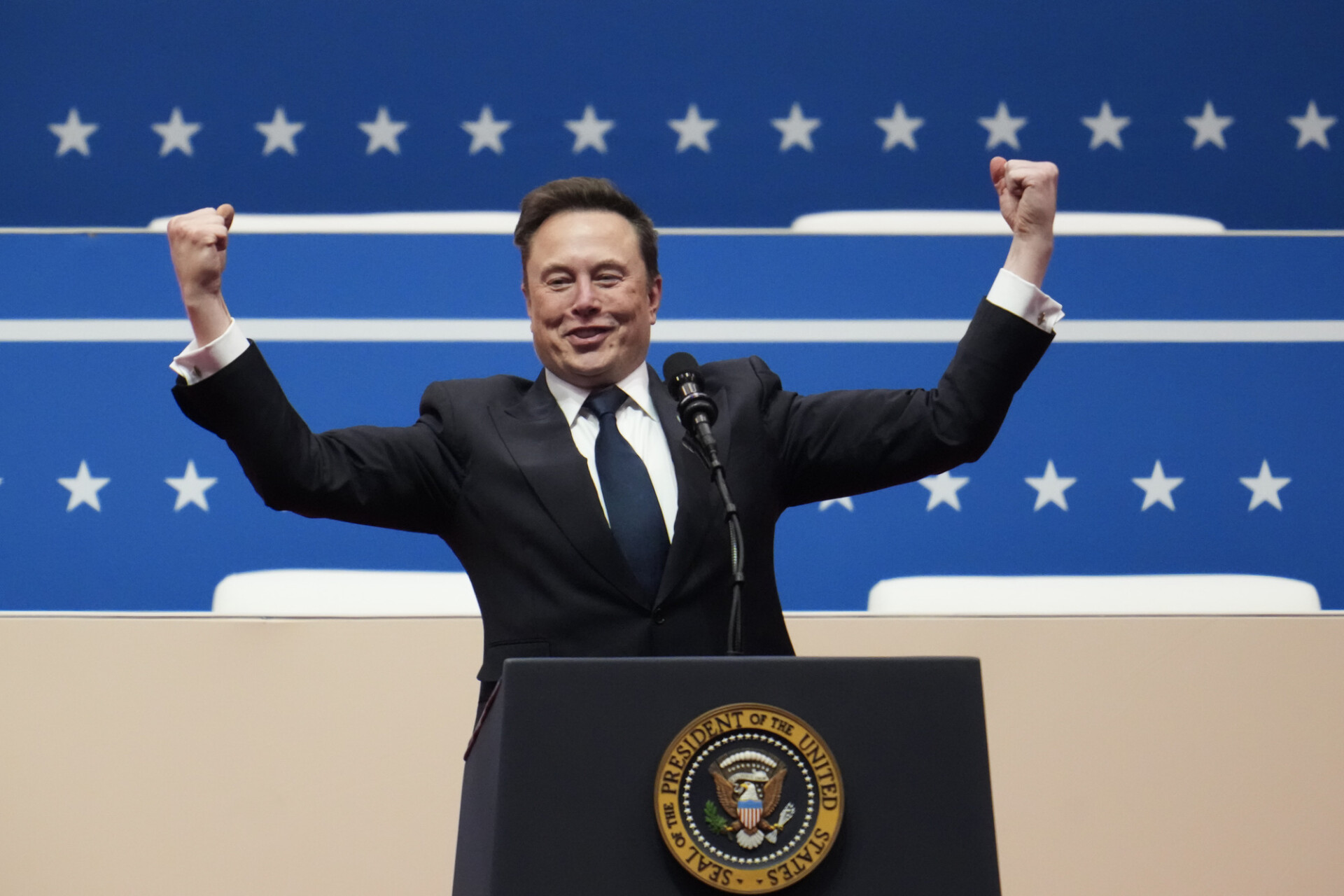
This approach carries undeniable risks. Brain drain is a real concern — the longest-tenured or most marketable federal employees, those with either specialized technical skills or institutional knowledge, will likely be the first ones to leave. There’s also the question of whether Musk, whose management style at X and Tesla has often favored dramatic gestures over slow but steady reforms, is the right person to oversee such a delicate restructuring. While Trump seems content to let Musk play the villain for now, tensions could emerge if DOGE’s actions start affecting critical government functions or generating too much negative press.

Looking ahead, DOGE’s approach — if pursued through the year — could prove more consequential than Trump’s other, far more publicized initiatives. While immigration raids and tariff wars generate headlines, the quiet erosion of federal workforce stability represents a fundamental shift in how American government operates. The question isn’t whether these 40,000 departures hit arbitrary targets, but whether they signal the beginning of a permanent transformation in how Americans view government service. For good or ill, early signs suggest they might.


Oliver Bateman is a historian and journalist based in Pittsburgh. He blogs, vlogs, and podcasts at his Substack, Oliver Bateman Does the Work

MoustacheClubUS

China is threatening America in the AI race

Reports sugget Zhipu AI  has released a new model that can rival leading US systems. Credit: Getty

Reports sugget Zhipu AI has released a new model that can rival leading US systems. Credit: Getty

July 1 2026 - 10:18am

China is trying to catch up with America on artificial intelligence. The Wall Street Journal has reported that Zhipu AI — one of China’s six “AI tiger” LLMs — has released a new model that can rival leading US systems, including Anthropic’s Mythos, in cybersecurity tasks such as pinpointing security bugs. While this marks a milestone in China’s drive to catch up with Western AI capabilities, strong performance on a single benchmark does not mean it has taken the lead. Chinese models still lag behind their Western counterparts in broader capabilities, such as autonomous operation. Skepticism is therefore warranted before resorting to hysterical conclusions, but complacency about the geopolitical implications of China’s AI advances would be an even greater mistake.

On the infrastructure side, Chinese AI is still constrained by access to advanced chips, with American labs way ahead in computing capacity as well as investment. Analysis from earlier this year suggests that Chinese models are likely to be at least a few months behind those in the US. But they are still continuing to make progress, or that the geopolitical importance of AI will be decided only by whose LLM has ventured deeper into the technological frontier. The practical applications of AI, countries’ to capture foreign markets, and the application of AI into the real economy will matter just as much.

Here, China may hold an advantage. As with its dominance across many critical supply chains, Beijing may not need to produce the most advanced AI systems — only those that are affordable and widely deployable. In doing so, it could consolidate global influence by supplying functional, low-cost AI at scale.

Beijing seems to be pursuing exactly that path, developing an AI “open-source” strategy that offers affordable, widely available AI models for companies and individuals to use and modify as they wish. The production of the DeepSeek AI model, which matched the performance of Silicon Valley tools such as ChatGPT at a fraction of the cost for users, created goodwill among Chinese models with developers.

The four most popular models on OpenRouter, an AI hardware platform for developers, are now all Chinese. The goal for China is not only to win the frontier-model race, but to make its systems the default layer of AI adoption across industries and global markets. For most economies, the choice is increasingly between an affordable tool they can deploy now and a more robust one that may be out of reach.

And while the countries adopting Chinese models may be exposed to political pressure and cyber threats from Beijing, safer and more capable alternatives matter little if they are unaffordable. American AI companies are already under pressure to monetize products whose operating costs are rising. If Chinese open-source models become the cheap default for startups, universities, governments and businesses across the developing world, then America’s AI lead will be eroded from below.

Perhaps more concerning for America in the long run is how AI can give Chinese manufacturing even more strength, through the ongoing integration of AI as a general-purpose technology. China’s new Five-Year Plan mentioned AI more than 50 times and includes an “AI+” action plan aimed at spreading AI across the economy.

Beijing has been pioneering automation of its critical infrastructure for years, with promising recent results in increasing warplane production capacity. In that regard, China’s open-model strategy and manufacturing dominance will reinforce each other. Cheap, adaptable models accelerate deployment across the real economy while those deployments generate real-world data and use cases that can feed back into further model improvement.

The United States should not dismiss the importance of its lead in the AI race. That lead worries Beijing, not least because a more automated Chinese economy would also become more vulnerable to AI-generated cyber threats. But nor should Washington assume that China cannot catch up with American capabilities over time.

This AI competition represents part of a broader struggle over tech supply chains and geopolitical influence. Decisions over whether to adopt US or Chinese models could produce a more fragmented global reality, with different regions relying on different cloud providers, chips and security structures. The result will likely be a global economy which is divided into competing spheres, rather than one which produces a single winner.


Miquel Vila is a political and geopolitical risk consultant focusing on industrial strategy, critical infrastructure and global supply chains.

miquelvilam