



X Close

British politicians don’t understand the China threat

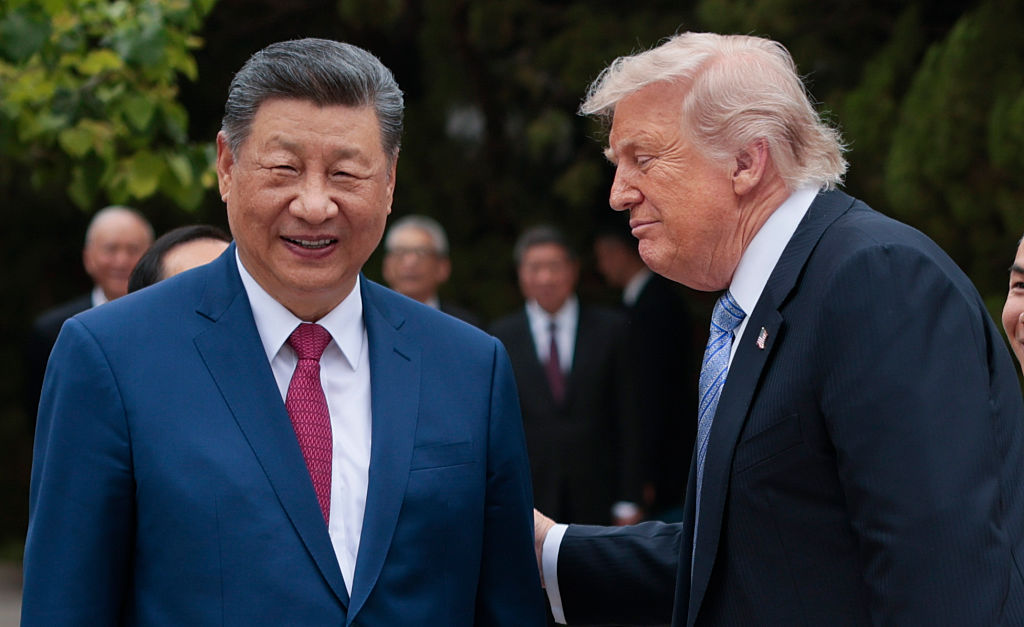
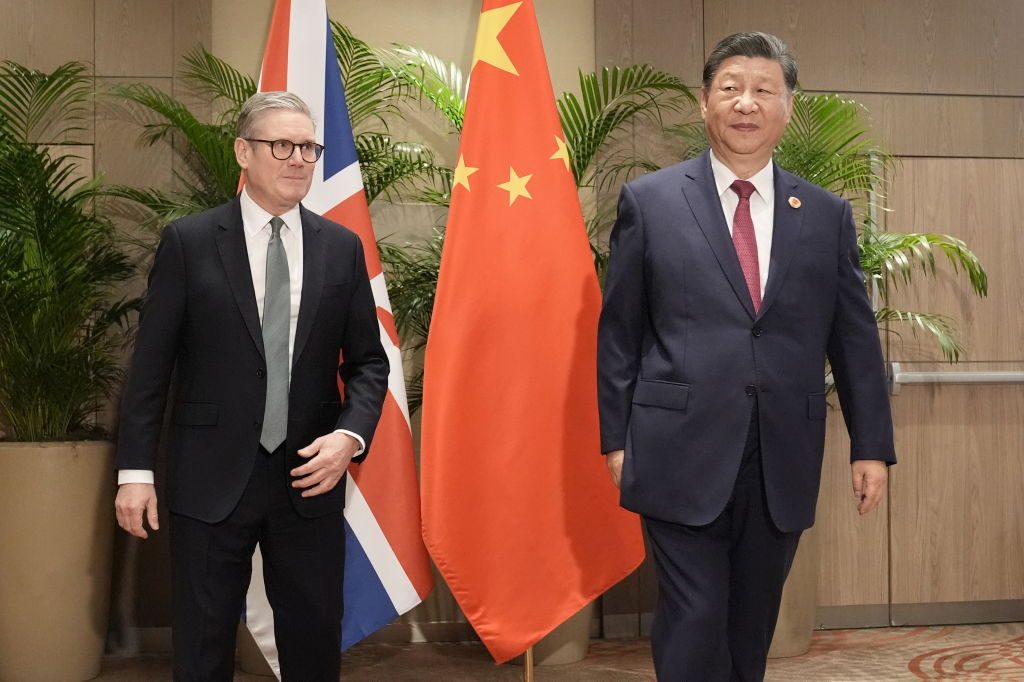
Friend or foe? Credit: Getty

Friend or foe? Credit: Getty

June 27 2025 - 7:00am

The Labour government’s year-long China Audit was completed this week. But rather than publish the document for all to see, the interested public had to be content with a statement in the Commons from Foreign Secretary David Lammy. “We cannot deal with China’s complexity unless we improve our capability to understand it,” he said on Tuesday.

Between Lammy’s statement and other strategy documents, Westminster’s conclusion is essentially that dealing with China is complicated. That is true, but the parliamentary debate following the statement brought home how far matters still need to go. In response to the Foreign Secretary, his shadow Priti Patel described the current government as going “cap in hand” to Beijing to compensate for its own alleged mishandling of the UK economy. Lammy’s reply provided a long list of the perceived failings of successive Conservative governments on China policy. In other words, partisanship trumped serious discussion.

Admittedly, the speed at which China’s influence has grown has inevitably made it difficult for governments to formulate a coherent strategy. Nonetheless, the longer poor-quality debate persists, the harder it will be for Britain to address the threats posed by Chinese espionage, transnational repression, and cyber and influence operations. Likewise, it will become increasingly difficult to develop mechanisms for taking advantage of Chinese trade and investment while protecting British firms from unfair competition.

The political point-scoring was punctuated by considered discussion of specific issues. These ranged from higher education (the economic importance of Chinese students versus risks of technology transfer) to human rights (Beijing’s record in Xinjiang, Hong Kong, and Tibet, as well as its pursuit of dissidents abroad, including in the UK) to national security threats (dual-use technologies and risks of surveillance and leverage from Chinese digital systems). When informed debate does occur, it focuses on specific issues in isolation from the bigger picture.

Judging by the Parliamentary footage, this debate on the first serious attempt by a UK government to put forward a systematic approach to China drew only a few dozen politicians. Beijing presents one of Britain’s greatest challenges across foreign, economic, and security policy. So why the indifference?

At root, this is attributable to a lack of baseline knowledge and a persistent belief that there is something about China which makes it inherently too complex to engage with if one is not an expert. This creates fertile ground for polarized and uninformed debate which falls short of the level of rigor Britain needs if it is to adapt to a world of increasing Chinese influence. For Parliament to effectively foster scrutiny of China policy and hold the Government to account, it requires informed engagement founded on bipartisan recognition of the magnitude of the challenges Beijing presents.

What Westminster often gets right is its discussion of China’s troubling human rights record, particularly in Hong Kong and on the treatment of Uyghur Muslims in Xinjiang. But this knowledge appears to be isolated from wider consideration of China’s geopolitical role and power relative to the UK. The result is an entirely unworkable position that calls for no engagement with the world’s second-largest economy purely on principle, or which relies on unrealistic faith in Britain’s ability to influence China’s domestic affairs.

There are choices to be made about how and when to engage with Beijing. But without publication of at least some concrete findings and the methods of the Government’s China audit, those choices could be misguided. The most fleshed-out recommendation Lammy announced was an increase in funding for improving China expertise. Some of that ought to be spent in Parliament.


William Matthews is a researcher specialising in China and the international order. He has a background in anthropology and comparative social science and writes on Substack.

WMatthewsChina

China is threatening America in the AI race

Reports sugget Zhipu AI  has released a new model that can rival leading US systems. Credit: Getty

Reports sugget Zhipu AI has released a new model that can rival leading US systems. Credit: Getty

July 1 2026 - 10:18am

China is trying to catch up with America on artificial intelligence. The Wall Street Journal has reported that Zhipu AI — one of China’s six “AI tiger” LLMs — has released a new model that can rival leading US systems, including Anthropic’s Mythos, in cybersecurity tasks such as pinpointing security bugs. While this marks a milestone in China’s drive to catch up with Western AI capabilities, strong performance on a single benchmark does not mean it has taken the lead. Chinese models still lag behind their Western counterparts in broader capabilities, such as autonomous operation. Skepticism is therefore warranted before resorting to hysterical conclusions, but complacency about the geopolitical implications of China’s AI advances would be an even greater mistake.

On the infrastructure side, Chinese AI is still constrained by access to advanced chips, with American labs way ahead in computing capacity as well as investment. Analysis from earlier this year suggests that Chinese models are likely to be at least a few months behind those in the US. But they are still continuing to make progress, or that the geopolitical importance of AI will be decided only by whose LLM has ventured deeper into the technological frontier. The practical applications of AI, countries’ to capture foreign markets, and the application of AI into the real economy will matter just as much.

Here, China may hold an advantage. As with its dominance across many critical supply chains, Beijing may not need to produce the most advanced AI systems — only those that are affordable and widely deployable. In doing so, it could consolidate global influence by supplying functional, low-cost AI at scale.

Beijing seems to be pursuing exactly that path, developing an AI “open-source” strategy that offers affordable, widely available AI models for companies and individuals to use and modify as they wish. The production of the DeepSeek AI model, which matched the performance of Silicon Valley tools such as ChatGPT at a fraction of the cost for users, created goodwill among Chinese models with developers.

The four most popular models on OpenRouter, an AI hardware platform for developers, are now all Chinese. The goal for China is not only to win the frontier-model race, but to make its systems the default layer of AI adoption across industries and global markets. For most economies, the choice is increasingly between an affordable tool they can deploy now and a more robust one that may be out of reach.

And while the countries adopting Chinese models may be exposed to political pressure and cyber threats from Beijing, safer and more capable alternatives matter little if they are unaffordable. American AI companies are already under pressure to monetize products whose operating costs are rising. If Chinese open-source models become the cheap default for startups, universities, governments and businesses across the developing world, then America’s AI lead will be eroded from below.

Perhaps more concerning for America in the long run is how AI can give Chinese manufacturing even more strength, through the ongoing integration of AI as a general-purpose technology. China’s new Five-Year Plan mentioned AI more than 50 times and includes an “AI+” action plan aimed at spreading AI across the economy.

Beijing has been pioneering automation of its critical infrastructure for years, with promising recent results in increasing warplane production capacity. In that regard, China’s open-model strategy and manufacturing dominance will reinforce each other. Cheap, adaptable models accelerate deployment across the real economy while those deployments generate real-world data and use cases that can feed back into further model improvement.

The United States should not dismiss the importance of its lead in the AI race. That lead worries Beijing, not least because a more automated Chinese economy would also become more vulnerable to AI-generated cyber threats. But nor should Washington assume that China cannot catch up with American capabilities over time.

This AI competition represents part of a broader struggle over tech supply chains and geopolitical influence. Decisions over whether to adopt US or Chinese models could produce a more fragmented global reality, with different regions relying on different cloud providers, chips and security structures. The result will likely be a global economy which is divided into competing spheres, rather than one which produces a single winner.


Miquel Vila is a political and geopolitical risk consultant focusing on industrial strategy, critical infrastructure and global supply chains.

miquelvilam