








August 26 2025 - 5:45pm
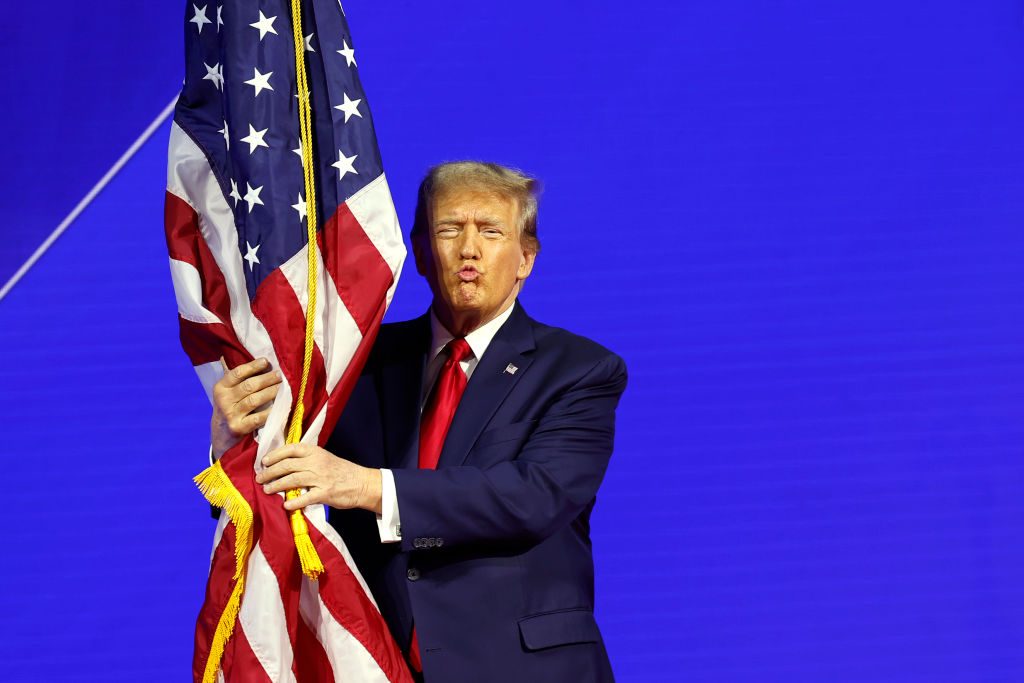
Most Americans rightly love the US, and don’t want to see it disrespected. Burning the American flag — an action occasionally undertaken by political protesters — is one of the more visceral displays of scorn for the country’s values, history, and people. From time to time, state or federal officials try to prohibit people from doing this. The latest effort comes from President Donald Trump, who signed an executive order on Monday encouraging the Justice Department to prosecute flag burners. His justification for this was that “when you burn the American flag, it incites riots at levels we’ve never seen before.”
The problem for the President is that this issue has already been decided. The First Amendment protects the right to engage in political speech and expression, and burning the American flag is a form of expressive speech. It doesn’t matter if it offends or provokes others: speech cannot be restricted merely because other people don’t like what the speaker is saying, or else the First Amendment would be useless.
What’s more, the Supreme Court has been crystal clear on this. In 1989, in Texas v. Johnson, the Court held 5-4 that various states’ bans on flag burning were unconstitutional. The decision was unpopular — President George H.W. Bush opposed it — and Congress passed federal legislation to ban flag burning. The next year, the flag burners won again: the Court ruled 5-4 that the federal law was unconstitutional too.
“While flag desecration — like virulent ethnic and religious epithets, vulgar repudiations of the draft, and scurrilous caricatures — is deeply offensive to many, the Government may not prohibit the expression of an idea simply because society finds the idea itself offensive or disagreeable,” wrote the majority.
Trump’s EO is obviously at odds with this decision, which everyone — including the President — must surely know. The text of the order tries to get around the Court by gesturing at established exceptions to the First Amendment: incitement and fighting words. And it’s true that under certain circumstances, expressive speech loses constitutional protection if it advocates imminent lawless action.
Merely burning the flag, however, does not automatically qualify as an inciting action — even if that action does occasionally cause lawlessness. To pretend otherwise would be to give in to the heckler’s veto, to say that a third party’s visceral opposition to the speech in question is reason enough to ban it.
This perspective is sometimes endorsed by progressive administrators at college campuses, who justify the banning of conservative speakers on grounds that irate Leftist students might respond with violence and destruction. It’s a perspective that empowers censorship, and ought to be rejected by everyone who dislikes ceding the town square to unreasonably offended miscreants.
Some conservatives have responded to Trump’s EO by acknowledging the constitutional issues but nonetheless concluding that a double standard persists. The conservative activist Christopher Rufo, for instance, wrote on X yesterday: “I’m sorry, but as long as this is the status quo, I’m not going to work myself into a state of hysteria about Trump’s executive order on burning the American flag.” That was in reference to two stories about the authorities prosecuting people for desecrating pro-LGBTQ displays, a Pride flag and a mural.
But these are very different cases, given that the individuals in question defaced property that did not belong to them. One of them, a 30-year-old Iowa man named Adolfo Martinez, stole a Pride flag from a church, burned it, threatened the inhabitants of a bar, and threatened to set the bar on fire as well. It’s always illegal to burn somebody else’s flag, whether it’s the American flag, or the Pride flag, or the flag of a fictional country. You can’t destroy other people’s stuff.
One can certainly object to the harshness of the sentences — Martinez received 15 years — which were due to hate crime laws that yield additional penalties in cases where a crime was motivated by animus toward a protected identity. Hate crime laws should be viewed with suspicion by defenders of free speech; it’s the criminal action — theft, arson, etc. — that deserves sanction, not the mindset of the perpetrator.
But two wrongs don’t make a right. Progressive jurisdictions going overboard on hate crime sentencing is not an excuse for the Trump administration to violate the First Amendment in even more obvious ways.