



X Close

Covid’s legacy lurks beneath this year’s ‘normal’ A-level results

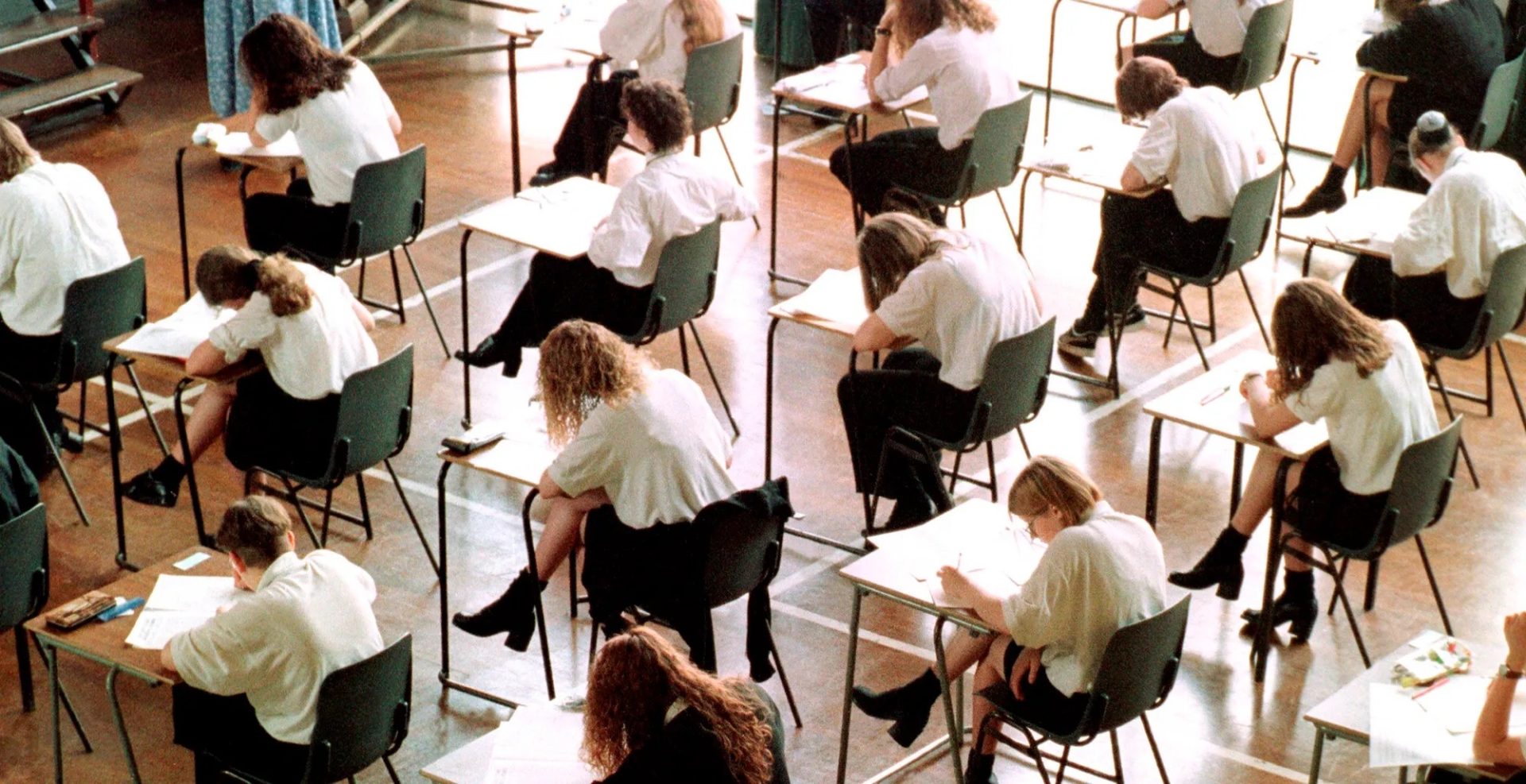
Lockdown's long shadow. Credit: Getty

Lockdown's long shadow. Credit: Getty

August 12 2025 - 7:00am

This week’s A-level results are set to return to pre-pandemic standards, while the pupils leaving school are the first cohort since 2019 to go through their major exam years without any Covid-related disruption. A staged return to “normal” grades was felt by Ofqual, the examinations regulator, to be fairer to those pupils, particularly from disadvantaged backgrounds, who missed out on their learning during lockdowns. This, coupled with strong claims made by universities that a swift restoration of pre-Covid grading would have caused chaos with their offers, explains why it has taken five years to reach this point.

So Thursday would seem to mark both a real and symbolic moment when schools in England can finally say that they are back to normal, and the collective trauma of Covid-19 is finally behind us.

Unfortunately, this isn’t quite true. The legacy of the pandemic persists in Britain’s schools. Perhaps the most marked change since 2020 is the high rates of truancy in schools: according to the Department for Education (DfE), over 147,600 pupils missed at least half of their classes last year. The knock-on effects are obvious: these pupils will score badly in examinations (if they even turn up for them), are less likely to go on to further education, and will have worse job prospects than their peers.

From a teacher’s perspective, there is only one thing worse than a pupil who is persistently absent, and that is one who is persistently present and disruptive. By any measure, behavior since the pandemic has worsened considerably. The figures released by the Government are shocking: suspensions have increased by 21%, from 787,000 in 2022/23 to 955,000 in 2023/24.

The DfE states that “since the pandemic, the rate of annual increases has accelerated.” Behind these rather bland words lies a depressing picture: according to the NASUWT, one of the main teaching unions, 40% of teachers reported that they have been physically attacked by a pupil in the last year, including being punched, kicked and spat at. Perhaps most worrying of all is that the biggest increase in permanent exclusions is among primary school children, up by 22%, suggesting long-term problems and disengagement from education.

Many of the difficulties facing schools since the pandemic are interrelated. The rise in mental health issues among young people can be related to a number of factors, including problems at home. But if school is chaotic or unsafe, these issues are exacerbated and add to those absence rates. Once again, the figures here are staggering: 500 children a day are referred to mental health services, with one in five children and young people claiming to be suffering from anxiety or depression.

How many teachers go into the profession to deal with complex psychological conditions, or risk being attacked by abusive and aggressive pupils? Very few, and many will leave because they cannot cope with the resulting pressure. Before the pandemic, around 75% of teachers expected to be in the job in three years’ time; now it is down to 60%, and pupil behavior is given as one of the main reasons why so many plan to quit. I know from working in both an independent and state school that filling positions becomes harder each year. The Government’s commitment to recruiting 6,500 new teachers, financed in part by imposing VAT on school fees, looks set to fail. Worse, recruitment is significantly down, with job advertisements falling 31% from last year. 

The pandemic is gone, but is far from a distant memory in schools. While many issues in the education sector have deeper roots, that prolonged period of disruption has exacerbated certain forms of behavior that could take decades to reverse. On Thursday we should celebrate all those students who have worked hard to earn the grades they need to move on to university: they will no doubt be a net gain to the country. But we should also note those who are not there, who didn’t turn up to their lessons, or missed their exams. Although they are absent from those front pages, they exist in unwanted statistics and will, in a very different way, also go on to shape our society.


David James is deputy head at a leading independent school in London, and also teaches at a local state school.

drdavidajames

China is threatening America in the AI race

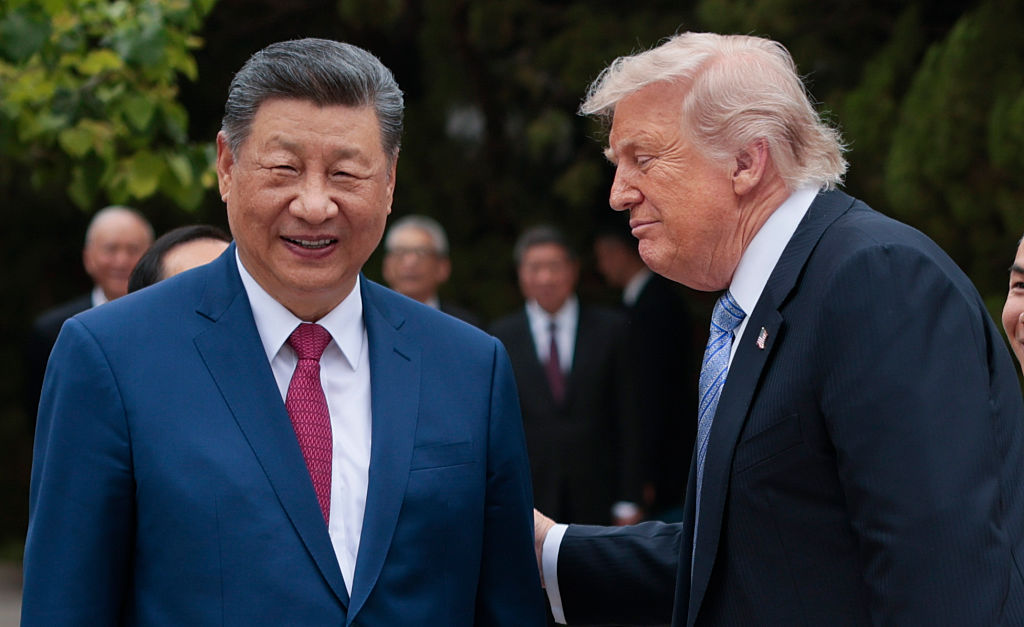
Reports sugget Zhipu AI  has released a new model that can rival leading US systems. Credit: Getty

Reports sugget Zhipu AI has released a new model that can rival leading US systems. Credit: Getty

July 1 2026 - 10:18am

China is trying to catch up with America on artificial intelligence. The Wall Street Journal has reported that Zhipu AI — one of China’s six “AI tiger” LLMs — has released a new model that can rival leading US systems, including Anthropic’s Mythos, in cybersecurity tasks such as pinpointing security bugs. While this marks a milestone in China’s drive to catch up with Western AI capabilities, strong performance on a single benchmark does not mean it has taken the lead. Chinese models still lag behind their Western counterparts in broader capabilities, such as autonomous operation. Skepticism is therefore warranted before resorting to hysterical conclusions, but complacency about the geopolitical implications of China’s AI advances would be an even greater mistake.

On the infrastructure side, Chinese AI is still constrained by access to advanced chips, with American labs way ahead in computing capacity as well as investment. Analysis from earlier this year suggests that Chinese models are likely to be at least a few months behind those in the US. But they are still continuing to make progress, or that the geopolitical importance of AI will be decided only by whose LLM has ventured deeper into the technological frontier. The practical applications of AI, countries’ to capture foreign markets, and the application of AI into the real economy will matter just as much.

Here, China may hold an advantage. As with its dominance across many critical supply chains, Beijing may not need to produce the most advanced AI systems — only those that are affordable and widely deployable. In doing so, it could consolidate global influence by supplying functional, low-cost AI at scale.

Beijing seems to be pursuing exactly that path, developing an AI “open-source” strategy that offers affordable, widely available AI models for companies and individuals to use and modify as they wish. The production of the DeepSeek AI model, which matched the performance of Silicon Valley tools such as ChatGPT at a fraction of the cost for users, created goodwill among Chinese models with developers.

The four most popular models on OpenRouter, an AI hardware platform for developers, are now all Chinese. The goal for China is not only to win the frontier-model race, but to make its systems the default layer of AI adoption across industries and global markets. For most economies, the choice is increasingly between an affordable tool they can deploy now and a more robust one that may be out of reach.

And while the countries adopting Chinese models may be exposed to political pressure and cyber threats from Beijing, safer and more capable alternatives matter little if they are unaffordable. American AI companies are already under pressure to monetize products whose operating costs are rising. If Chinese open-source models become the cheap default for startups, universities, governments and businesses across the developing world, then America’s AI lead will be eroded from below.

Perhaps more concerning for America in the long run is how AI can give Chinese manufacturing even more strength, through the ongoing integration of AI as a general-purpose technology. China’s new Five-Year Plan mentioned AI more than 50 times and includes an “AI+” action plan aimed at spreading AI across the economy.

Beijing has been pioneering automation of its critical infrastructure for years, with promising recent results in increasing warplane production capacity. In that regard, China’s open-model strategy and manufacturing dominance will reinforce each other. Cheap, adaptable models accelerate deployment across the real economy while those deployments generate real-world data and use cases that can feed back into further model improvement.

The United States should not dismiss the importance of its lead in the AI race. That lead worries Beijing, not least because a more automated Chinese economy would also become more vulnerable to AI-generated cyber threats. But nor should Washington assume that China cannot catch up with American capabilities over time.

This AI competition represents part of a broader struggle over tech supply chains and geopolitical influence. Decisions over whether to adopt US or Chinese models could produce a more fragmented global reality, with different regions relying on different cloud providers, chips and security structures. The result will likely be a global economy which is divided into competing spheres, rather than one which produces a single winner.


Miquel Vila is a political and geopolitical risk consultant focusing on industrial strategy, critical infrastructure and global supply chains.

miquelvilam