








April 13 2025 - 7:00pm
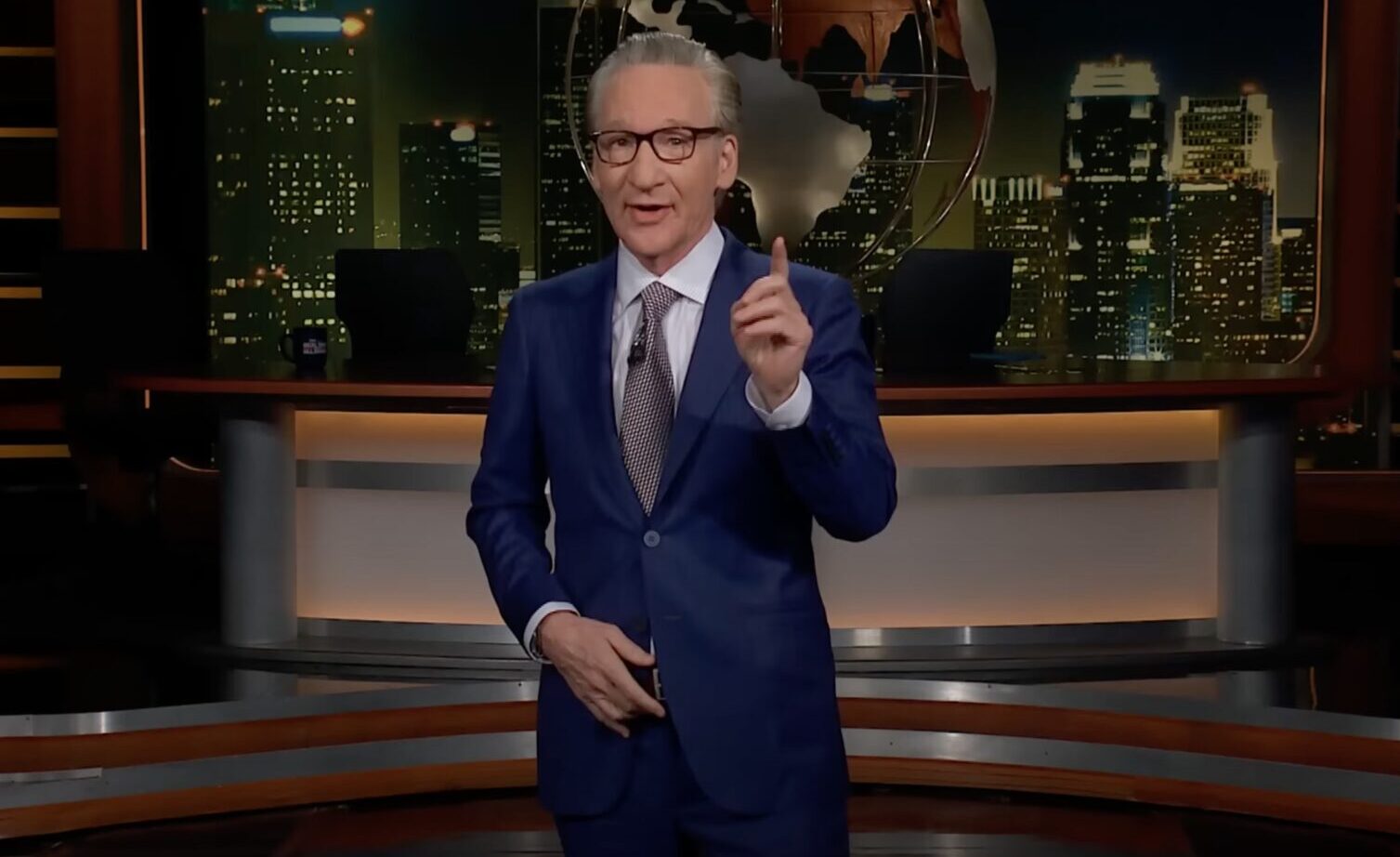
Bill Maher, that consummate political pot-stirrer, has risked opprobrium from his fellow liberals after dining with Donald Trump at the White House. More than that, the comedian claimed on Friday night that the President was “gracious and measured” in private, quite unlike the bombastic figure seen on television. “A crazy person doesn’t live in the White House,” Maher explained to his audience. “A person who plays a crazy person on TV a lot lives there.”
Maher’s experience offers another illuminating glimpse into an aspect of Trump’s character which a small cadre of liberal commentators has reluctantly acknowledged: the gap between his carefully cultivated public persona and his private demeanor is not evidence of mental instability but instead calculation. This distinction matters enormously, not least because it suggests a fundamental rethinking of how the American Left might effectively counter Trump’s appeal.
For years, a considerable segment of the liberal establishment has operated under the assumption that Trump’s erratic behavior and inflammatory rhetoric stem from genuine psychological deficiencies. Progressive commentator Keith Olbermann has repeatedly suggested Trump suffers from “paranoid delusions”, while late-night host Jimmy Kimmel routinely portrays the President’s policy ideas as evidence of his unhinged nature. Last year, respected liberal historian Anne Applebaum wrote a blistering Atlantic article comparing Trump’s rhetoric to that of “Hitler, Stalin, and Mussolini”, implying a dangerous mental instability at the heart of his leadership.
Yet a more nuanced understanding has emerged among a different set of liberal observers — those who, like Maher this week, are willing to acknowledge that Trump’s behavior might be less a product of instability and more a demonstration of media savvy. Jennifer Mercieca, a professor at Texas A&M University, documented his deliberately erratic communication approach in her 2020 book Demagogue for President: The Rhetorical Genius of Donald Trump. Far from portraying him as mentally unstable, Mercieca identified six distinct rhetorical patterns he employs: three to divide opponents and three to unite supporters, all deployed with strategic intent.
Similarly, journalist Matt Taibbi’s Insane Clown President framed Trump’s outlandish public behavior as performance art designed to shape and then dominate news cycles. Even CNN commentator Van Jones, hardly a MAGA diehard, stoked Leftist outrage back in 2017 when he acknowledged the effectiveness of Trump’s first address to Congress, declaring that in that moment “he became president of the United States.”
What makes Trump’s performance particularly effective is its foundation in his five-decade career as a media personality. Long before entering politics, he honed his instincts through reality television, professional wrestling appearances, and tabloid manipulations. This extensive background has given him an intuitive understanding of what generates attention — a skill far more valuable in today’s media ecosystem than policy expertise or fealty to a particular ideology.
By acknowledging Trump’s capacity for self-awareness and measured conversation in private settings, Maher has further undermined the prevailing narrative of the President as unstable. “He’s much more self-aware than he lets on in public,” Maher noted, adding that during their conversation Trump even calmly admitted to losing the 2020 election.
This self-awareness suggests that Trump operates less like a conventional politician and more like the real-estate speculator he actually is: rapidly cycling through ideas, abandoning what doesn’t work, cutting losses when necessary, and doubling down on what resonates with or outrages his audience, regardless of ideological consistency. It’s an approach that treats politics as a series of speculative investments rather than a commitment to fixed principles.
The implications of this distinction extend beyond mere academic interest. If liberals continue to frame the President as deranged or stupidly criminal — a framing that has consistently failed to diminish his appeal — they risk fighting a phantom version of him rather than the calculating figure he appears to be in private settings (consider how he won over uber-liberal Bill Gates during a meeting shortly after the 2024 election). This mischaracterization not only limits the effectiveness of political opposition, but also reinforces the very narrative Trump cultivates: that the “establishment” fundamentally misunderstands and misrepresents him.
Maher’s approach — acknowledging both Trump’s strategic acumen and his capacity for reasonable engagement — may prove more effective than endless moral outrage. Perhaps the most revealing aspect of Maher’s White House dinner was not that Trump displayed graciousness, but that he demonstrated the capacity to adapt his persona to his audience — precisely the skill that has made him such a formidable political force.
Understanding this adaptability, rather than automatically dismissing it as evidence of instability, is the key for pundits hoping to reckon with the complex figure behind the performance. After all, as Maher pointedly reminded his audience, “It doesn’t matter who he is at a private dinner with a comedian. It matters who he is on the world stage.” If Trump isn’t the person they want there, his opponents need to beat him at his own game.
Oliver Bateman is a historian and journalist based in Pittsburgh. He blogs, vlogs, and podcasts at his Substack, Oliver Bateman Does the Work
 MoustacheClubUS