



March 5 2025 - 4:00pm
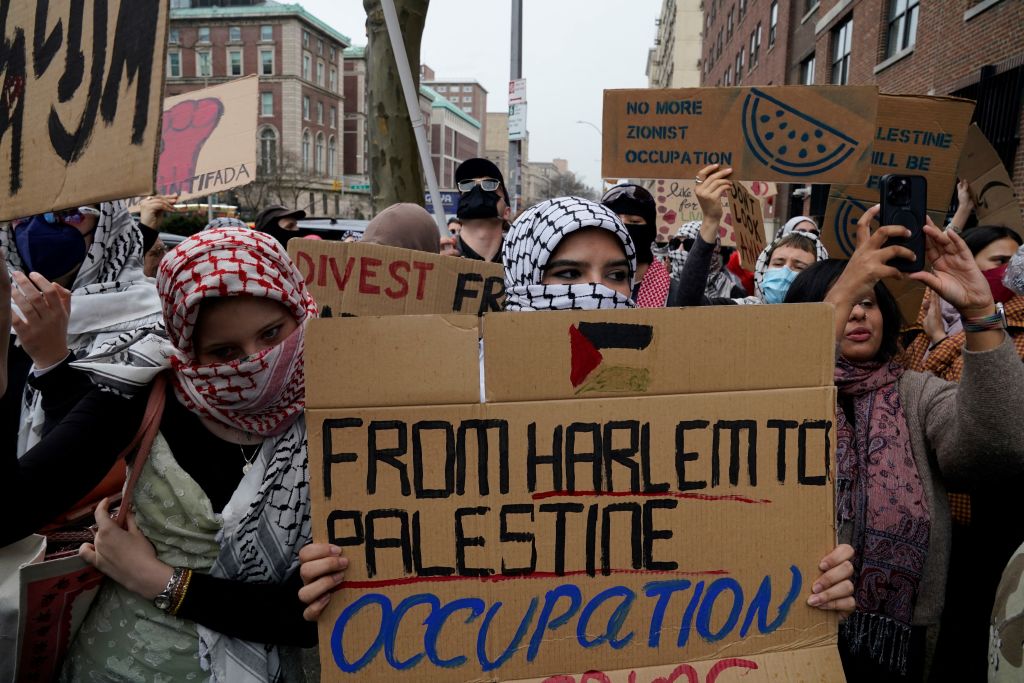
Since the October 7 attacks in 2023, protests on American campuses have too often descended into lawlessness and often antisemitic discrimination. Just last week, keffiyeh-wearing students occupied a building at Barnard College in New York and allegedly assaulted an employee.
Yesterday, President Donald Trump took to Truth Social to address incidents like these across American campuses. He announced harsh punishments for student “agitators”, and threatened to revoke federal funding from universities which fail to sufficiently clamp down on “illegal protests”.
Unfortunately, though, his proposed solutions only deepen the free speech crisis on campus by triggering serious constitutional concerns. In fact, nearly everything in Trump’s post is either confusing, a chill on free speech, or both.
Let’s start by underlining the uncontroversial part: revoking the student visas of foreign nationals if they engage in criminal activity and arresting American students who do the same. Few would disagree with such a move. Unless these were federal crimes, the federal government likely would not even have to be involved.
Elsewhere, however, Trump proposes actions that go well beyond federal powers, let alone presidential powers. And schools that attempt to comply are likely to crack down on both protected and unprotected speech. This is exactly what happened when the Obama and Biden administrations revised federal Title IX guidance, which is intended to prohibit sex-based discrimination in higher education programs but has also been used to justify restraints on expression.
In his post, Trump also adds the adjective “illegal” before “protests”, which makes the first sentence about cutting federal funding to colleges that “allow illegal protests” sound reasonable. Things which are illegal are already beyond the protection of law — that’s how they came to be illegal, after all. If we said the government should stop illegal dancing, or illegal poetry, or illegal journalism, it would sound quite a bit less unconstitutional than if we’d said the government should stop dancing, poetry, or journalism, naked of adjectives.
But protests, in and of themselves, aren’t illegal. Sometimes illegal things happen at protests, but that’s when the protest ends and a crime or offense begins. For example, if a protest devolves into violence and property destruction, you don’t have an “illegal protest”: you have a riot. We could charitably read Trump’s formulation as shorthand for a character-limited social media format, but when talking about arresting people for their expression, a little precision is in order.
The statement that American students could be “permanently expelled” is perplexing, because there is no such federal power. The federal government cannot expel people from anywhere but a few federally operated colleges and universities, such as service academies like West Point. Private universities mostly govern themselves, and public schools are generally run by states.
Finally, the President says, “NO MASKS!” — probably because the Barnard students wore masks when they occupied Milbank Hall last week. There are a number of competing interests at stake here: simple masks to protect someone’s anonymity are generally protected, but masks used during the commission of a crime are not. It’s also worth mentioning that the desire of lawful protesters to wear masks is easy to understand when the president of the United States makes statements suggesting an intent to retaliate for their presence at protests.
In January, when Trump was sworn in, FIRE wrote the President a letter outlining a path forward to combat antisemitism in higher education. In short, that path is to add religion as a protected class under Title VI (which presently prohibits discrimination on the basis of race, color, and national origin in programs receiving federal assistance), and to codify existing Department of Education policies on racial and ethnic stereotyping as well as the Supreme Court’s test for peer-on-peer harassment. This way, everyone has a bright line for what conduct is acceptable.
Focusing on the protests, however, is a mistake. What got colleges into this situation was a concentrated indifference to the hostile climate (and often harassment) faced by Jewish students — even as those same colleges built multi-level censorship bureaucracies around their fascination with microaggressions directed at every other intersectional category then known or later invented. Much of this bureaucracy, including the DEI offices that Trump wants to dismantle, was justified by schools as necessary to comply with vague directives under Title IX. If a new, vague rule to stop protests is put in place, colleges will over-comply with that, too.
Whether it was the intended message or not, higher education has inculcated in some portion of its community the understanding that some people don’t deserve equal protection under the schools’ rules or to be fully included in campus life. And we can reverse this trend by respecting everyone’s rights — including the right to be free from discriminatory harassment and the right to say things that may hurt someone’s feelings.
However long it took to get there, Barnard’s decision to enforce its rules is a step in the right direction. The government can encourage more colleges to do the same with bright-line federal policies which treat everyone equally, giving everyone the same protection under law while ensuring everyone has the same right to freedom of expression.
President Trump should address campus unrest by encouraging campuses to model the freedoms America promises to protect. He can do that by pushing schools to enshrine and enforce protections for freedom of speech and academic freedom, while stressing that misconduct and criminal behavior must be punished. What he shouldn’t do is create new excuses for campuses to undermine those promises.
Greg Lukianoff is the president and CEO of the Foundation for Individual Rights and Expression (FIRE), and co-author of The Canceling of the American Mind. Adam Goldstein is the vice president of strategic initiatives at the Foundation for Individual Rights and Expression (FIRE).
 glukianoff