




X Close

Risk of Catholic schism has rallied traditionalists behind Pope Leo

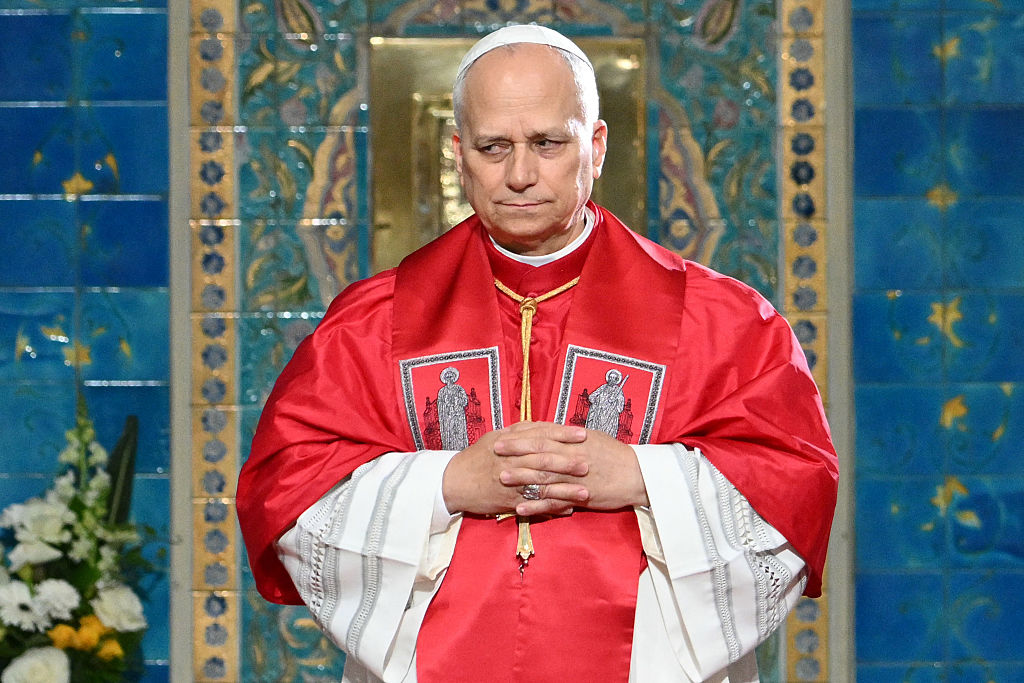
The Pope has received robust backing from some surprising corners of the Church. Credit: Getty

The Pope has received robust backing from some surprising corners of the Church. Credit: Getty

June 30 2026 - 4:39pm

Pope Leo XIV this week faces his first real crisis as head of the Catholic Church. The Society of Saint Pius X, an ultra-traditionalist breakaway group, is poised to consecrate four bishops without papal authorization. On Monday, the Roman Pontiff addressed a final appeal to SSPX leaders, warning them that their “schismatic act” would amount to a “sin of extreme gravity”, and hinting that the society could lose its faculty to perform certain sacraments.

What’s surprising, though, is that nearly all the notable traditionalist voices in the Church hierarchy and among the laity are lining up behind the Pope, rather than the SSPX. This, notwithstanding some “trad” malcontents grumbling about Leo’s commitment to social-justice issues, as they did with his immediate predecessor.

The origins of the crisis lie in the aftermath of the Second Vatican Council more than 60 years ago. Rejecting the council’s liturgical reforms and emphasis on religious liberty (within the limits of the common good), French archbishop Marcel Lefebvre founded the society in 1970 with the explicit intention of maintaining preconciliar norms. The break came with Lefebvre’s decision in 1988 to consecrate four SSPX bishops on his own authority. Pope John Paul II declared that, under canon law, Lefebvre and these four bishops had incurred automatic excommunication for their schismatic act.

Yet the successors of Peter continued to nurture hopes of reconciliation. In an act of mercy in 2009, Pope Benedict XVI lifted the excommunication of the four new bishops (Lefebvre had already died by then). A few years later, Benedict’s successor Francis granted SSPX priests the faculty to hear confessions and witness Christian marriages.

In his warning letter this week, Leo alluded to his predecessors’ gestures of Petrine “affection”, made in recognition of “the devotion to liturgical life, commitment to priestly formation, apostolic zeal, and desire for fidelity to Tradition” that characterizes individual members. Yet the SSPX seems undeterred, and is seemingly prepared for a full schism from the Roman communion.

What has surprised many observers, however, is the swiftness with which more mainstream forces in the traditionalist movement have condemned the SSPX in defense of the Pope’s course of action.

Rorate Caeli, the hugely influential trad blog that opposed the Francis papacy over its supposedly liberal direction, warned the SSPX today that “Leo XIV is filled with the heart of Saint Peter and the epistolary sincerity of Saint Paul. Catholics should listen closely.” Likewise, Eric Sammons, the Editor-in-Chief of the trad organ Crisis, wrote this morning: “I appreciate that the Holy Father is acting as a father here, making clear what he is forbidding, and urging his children to avoid that path. I pray the SSPX leadership would stand down.” Cardinal Robert Sarah, who has previously been tipped as a long-shot trad contender for the papacy, lamented earlier this year how the SSPX’s decision had caused a “new tear in the seamless garment of the Church”.

Why the society insists on going ahead with unlawful consecrations, despite the warnings of responsible traditional forces, will remain a mystery. It is, Catholics might say, the “mystery of evil”.


Sohrab Ahmari is the US editor of UnHerd and the author, most recently, of Tyranny, Inc: How Private Power Crushed American Liberty — and What To Do About It

SohrabAhmari

China is threatening America in the AI race

Reports sugget Zhipu AI  has released a new model that can rival leading US systems. Credit: Getty

Reports sugget Zhipu AI has released a new model that can rival leading US systems. Credit: Getty

July 1 2026 - 10:18am

China is trying to catch up with America on artificial intelligence. The Wall Street Journal has reported that Zhipu AI — one of China’s six “AI tiger” LLMs — has released a new model that can rival leading US systems, including Anthropic’s Mythos, in cybersecurity tasks such as pinpointing security bugs. While this marks a milestone in China’s drive to catch up with Western AI capabilities, strong performance on a single benchmark does not mean it has taken the lead. Chinese models still lag behind their Western counterparts in broader capabilities, such as autonomous operation. Skepticism is therefore warranted before resorting to hysterical conclusions, but complacency about the geopolitical implications of China’s AI advances would be an even greater mistake.

On the infrastructure side, Chinese AI is still constrained by access to advanced chips, with American labs way ahead in computing capacity as well as investment. Analysis from earlier this year suggests that Chinese models are likely to be at least a few months behind those in the US. But they are still continuing to make progress, or that the geopolitical importance of AI will be decided only by whose LLM has ventured deeper into the technological frontier. The practical applications of AI, countries’ to capture foreign markets, and the application of AI into the real economy will matter just as much.

Here, China may hold an advantage. As with its dominance across many critical supply chains, Beijing may not need to produce the most advanced AI systems — only those that are affordable and widely deployable. In doing so, it could consolidate global influence by supplying functional, low-cost AI at scale.

Beijing seems to be pursuing exactly that path, developing an AI “open-source” strategy that offers affordable, widely available AI models for companies and individuals to use and modify as they wish. The production of the DeepSeek AI model, which matched the performance of Silicon Valley tools such as ChatGPT at a fraction of the cost for users, created goodwill among Chinese models with developers.

The four most popular models on OpenRouter, an AI hardware platform for developers, are now all Chinese. The goal for China is not only to win the frontier-model race, but to make its systems the default layer of AI adoption across industries and global markets. For most economies, the choice is increasingly between an affordable tool they can deploy now and a more robust one that may be out of reach.

And while the countries adopting Chinese models may be exposed to political pressure and cyber threats from Beijing, safer and more capable alternatives matter little if they are unaffordable. American AI companies are already under pressure to monetize products whose operating costs are rising. If Chinese open-source models become the cheap default for startups, universities, governments and businesses across the developing world, then America’s AI lead will be eroded from below.

Perhaps more concerning for America in the long run is how AI can give Chinese manufacturing even more strength, through the ongoing integration of AI as a general-purpose technology. China’s new Five-Year Plan mentioned AI more than 50 times and includes an “AI+” action plan aimed at spreading AI across the economy.

Beijing has been pioneering automation of its critical infrastructure for years, with promising recent results in increasing warplane production capacity. In that regard, China’s open-model strategy and manufacturing dominance will reinforce each other. Cheap, adaptable models accelerate deployment across the real economy while those deployments generate real-world data and use cases that can feed back into further model improvement.

The United States should not dismiss the importance of its lead in the AI race. That lead worries Beijing, not least because a more automated Chinese economy would also become more vulnerable to AI-generated cyber threats. But nor should Washington assume that China cannot catch up with American capabilities over time.

This AI competition represents part of a broader struggle over tech supply chains and geopolitical influence. Decisions over whether to adopt US or Chinese models could produce a more fragmented global reality, with different regions relying on different cloud providers, chips and security structures. The result will likely be a global economy which is divided into competing spheres, rather than one which produces a single winner.


Miquel Vila is a political and geopolitical risk consultant focusing on industrial strategy, critical infrastructure and global supply chains.

miquelvilam