



August 27 2025 - 1:00pm
“Keep blinking H! It’ll work its way out.” One of Ken Dodd’s best-loved gags certainly assumed a widespread level of historical knowledge about the demise of England’s last Anglo-Saxon king. But then 1066 and all that has been a staple of English history from the first stitch in the Bayeux Tapestry to Sellar and Yeatman’s satirical assessment of the Norman Conquest in the Thirties, “a good thing as from this time onwards England stopped being conquered and thus was able to become top nation”.
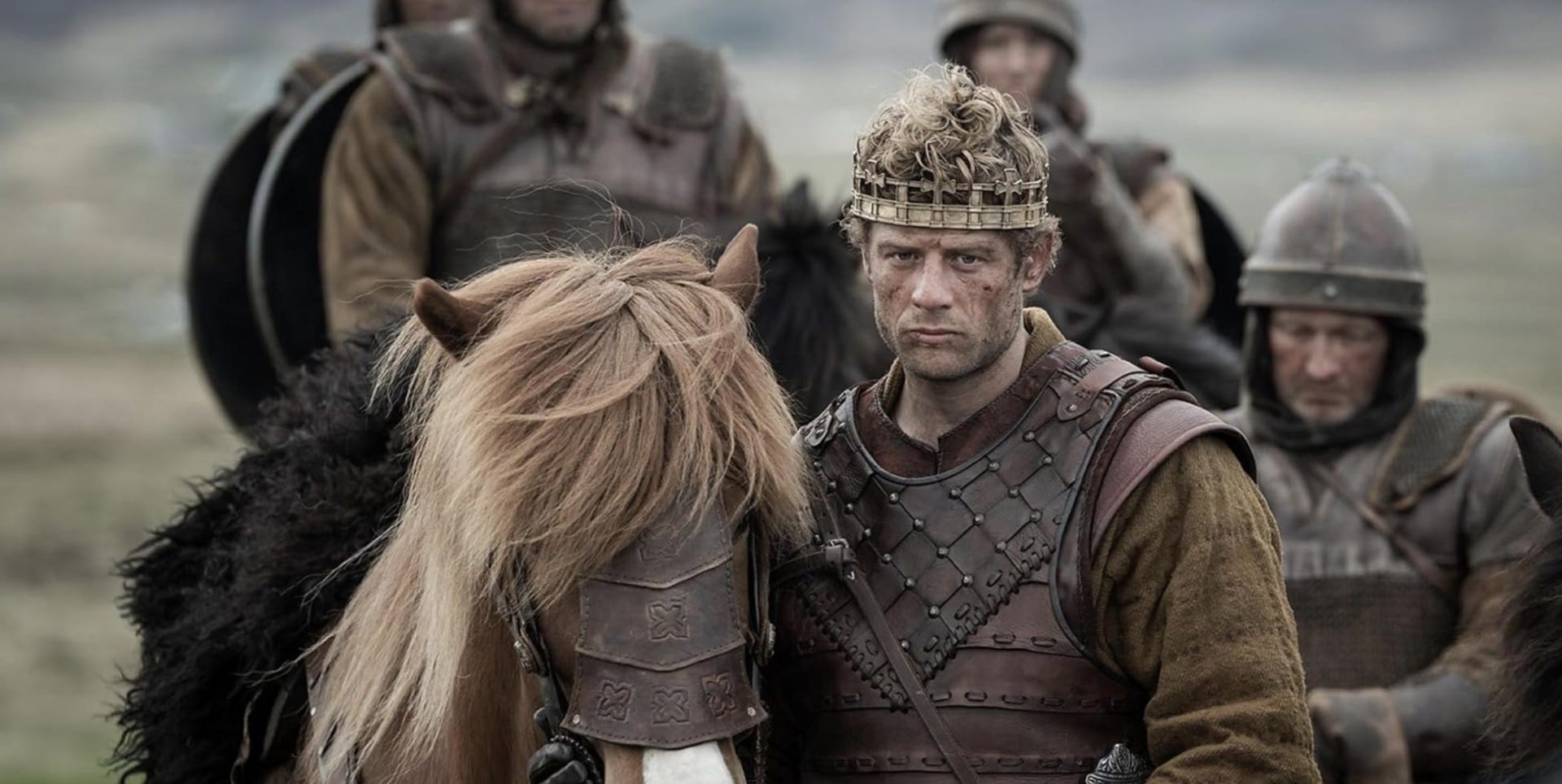
Thus, the BBC’s latest historical drama series, King and Conqueror, taps into the viewing public’s appetite for battlements and chain mail, as well as the chance to delve into the intricacies of our island story. Much like The Last Kingdom rehabilitated the Vikings (a great bunch of lads, in comparison to the annoyingly pious King Alfred), and Wolf Hall painted the brutish and corrupt Thomas Cromwell as a thoughtful man of integrity, we now have Harold Godwinson (played by James Norton) as an earnest and vacillating son of Wessex. Meanwhile, the sainted Edward the Confessor is portrayed rather effectively by Eddie Marsan as a simpering weirdo, and William the Bastard is played by dishy Dane Nikolaj William Coster-Waldau as a model of chivalry and Norman bonhomie.
Given how William treated my native Northumbria — the “Harrying of the North” described by some historians as little short of genocide — I’m not especially receptive to revisionist takes. The Norman Conquest left deep scars, and its consequences still shape Britain today. When John O’Farrell wrote Things Can Only Get Better in 1998, his slightly flippant point that “the Normans of Fulham still drank wine and owned land in France and the Saxons of Fulham still drank ale, used ‘Anglo-Saxon’ vocabulary and tended small strips of land behind the playing fields” nonetheless revealed something profound about the class structure that 1066 formed.
I grew up on the estate of a family which came over to Northumberland from Normandy, and the late Duke of Westminster was surely right to advise a budding entrepreneur who wanted to know how to become as rich as him to “make sure they have an ancestor who was a very good friend of William the Conqueror”. As the writer Ed West has observed, “even the Harry Potter series follows the tradition, setting the Anglo-Saxon named Potter and Weasley against the very Norman-sounding Voldemort and Malfoy.”
King and Conqueror only began this week, and like most modern treatments of medieval history we are confronted first by the muted hues of gray and brown homespun and dull, tarnished metal. Why are modern directors so scared of color? Contrast this with Hollywood’s treatment of their Castilian contemporary, Rodrigo Díaz de Vivar, in the glorious technicolor of El Cid. As someone who struggles to take movies seriously if they get the costumes wrong, I have sympathy with the outraged ecclesiastics on social media who have scoffed at the Archbishop of Canterbury’s improper vestments. I was amused too by the Playmobil ramparts of London, and to see that the Northumbrian Earl Siward was accompanied by men bearing the standard of Northumberland County Council (invented in the Fifties) rather than the traditional banner of St Cuthbert.
The dialogue, when actually audible, broadly follows the “Gentlemen to bed! For we rise at daybreak” model, and I nearly spilt my mead when Sweyn of Wessex declares that “talking reason to a Northerner is like juggling mud.” The color-blind casting has already drawn much online ire, and probably further confuses an already complex story.
In important respects, this is traditional history as dynastic squabble — real-life Game of Thrones, only with fewer dragons and more plausible family trees. But what is hinted at in King and Conqueror is that the instability and chaos of Edward the Confessor’s kingdom could not last. The real story here is that a unified Anglo-Saxon England lasted as a nation for just over a century after King Aethelstan’s victory at Brunanburh, and was rapidly conquered after one key battle in 1066, as the Normans picked off the constituent earldoms one by one, when they could — and should — have stood together.
Referring to Anglo-Saxon England as a failed state may be too strong, but the demise of the ancien regime of earls and housecarls was rapid, and contemporary historians were baffled that the English never successfully rose in rebellion. As James Hawes explained in his magisterial The Shortest History of England, there were good reasons why the Normans conquered England so easily, but most of these have been largely forgotten or overlooked. Chief among them is that only Aethelstan had been able to unite the ancient English kingdoms of north and south, and that native elites, “corrupted by Aethelred, Danified by Cnut [and] decimated at Hastings”, threw the towel in very quickly. Indeed, most had fled the country by 1076.
So perhaps William the Conqueror deserves to be rehabilitated after all. For all his rapacity, he provided a unified elite and brought law and order to a kingdom that had been a basket case for decades. No wonder that Ken Dodd knew his audience would get the joke.
Dan Jackson is the author of the best-selling book The Northumbrians: The North East of England and its People. A New History, published by Hurst (2019)
 northumbriana