

X Close

The Tory crisis runs deeper than a reshuffle

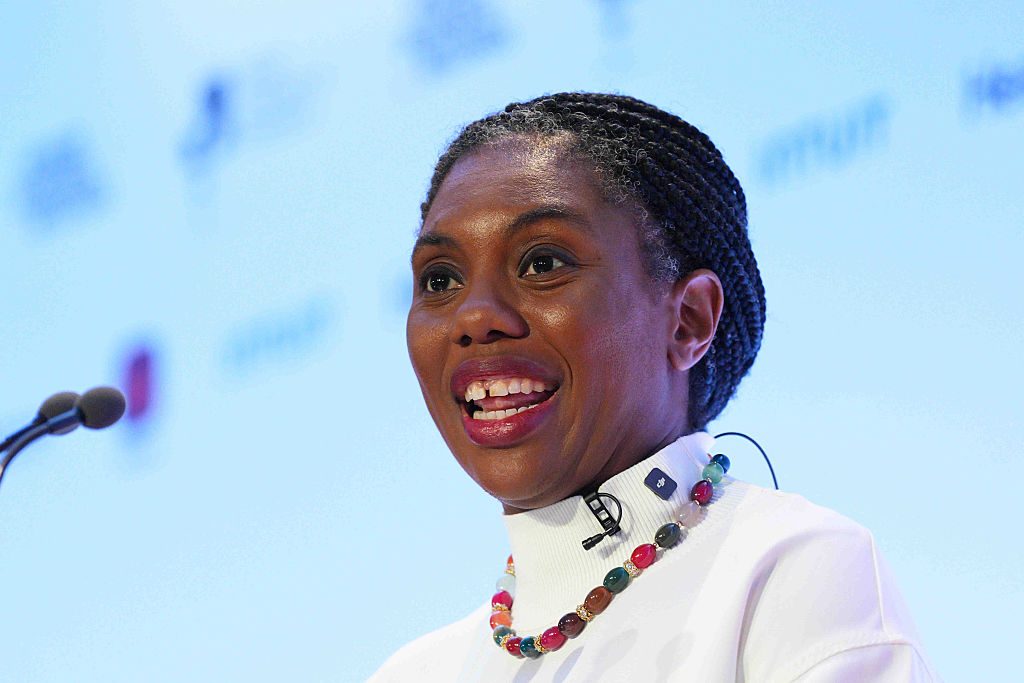
Kemi Badenoch is losing ground to Reform. Credit: Getty

Kemi Badenoch is losing ground to Reform. Credit: Getty

July 23 2025 - 9:30am

Shadow cabinet reshuffles are perhaps the clearest sign of the indignity of Opposition in Westminster. When a PM moves their team, the newscasters watch on with bated breath, ready to analyze every move. Meanwhile, if the Leader of the Opposition changes their team, the story might just sneak into the top three headlines of the day — especially given how forgettable the current front bench has been.

In the eight months since Kemi Badenoch became leader, few members of her shadow cabinet have really broken into the public consciousness. Only the most obsessive followers of Westminster would have been able to name Edward Agar, who has stood down from the health brief because of health concerns. Indeed, the only one to really make a mark has been Robert Jenrick, whose slick videos point to an ambition that goes beyond his current position as shadow justice secretary.

The latest changes are clearly intended to address this, but they also highlight the problems still plaguing the Tories. The most significant move is the return of James Cleverly as shadow housing secretary. He brings some pedigree to the front bench and shores up the support of the more moderate wing of the party. The move, however, is a reminder that the party still relies heavily on those figures from its 14 years in power, and the baggage they carry. The new figures will need time to grow into their roles, leaving the front bench looking much like it did during the Conservatives’ time in government.

The hope among Tories is that the trade-off is adding some energy. Cleverly has been an active outside voice since returning to the backbenches. He also has a good feel for the party and its members. Putting him in charge of housing makes Cleverly central to how the Conservatives engage with government policy. This role will be key in determining whether they succumb to Nimby tendencies or make a play for younger voters by challenging Labour to deliver more homes. It also appears to be a move towards the center ground of the party.

That there’s a reshuffle at all right now shows the struggles the Tories have been facing. Badenoch once promised that her first front bench would remain in place until the next election — and it feels like more than just Agar’s stepping down that has prompted this change. The party has gone backwards since its “rock-bottom” performance in last year’s election, losing not just swathes of voters, but also prominent figures to Reform. Just yesterday, Laura Anne Jones became the first Member of the Senedd to defect from the Conservatives to Nigel Farage’s party.

Badenoch had intended for the rebuild to be measured and thoughtful, rather than knee-jerk. Yet events are overtaking this approach. The Labour government has floundered more quickly than anyone thought likely, but this has largely been to Reform’s benefit. Instead of climbing back from a distant second in the polls, the Conservatives are fighting to avoid a fall to fourth. Something radical needs to change for them to arrest this.

A reshuffle might not be enough. The party is still struggling to shed the issues of the last 14 years. Bringing back one of the leading figures from that era hardly helps shed that legacy. It points to the lack of options within the Conservatives and the challenges they are facing in producing new answers. Still, there is a sign they are trying something. Opposition reshuffles rarely set the world alight, but they point towards a party that is not giving up yet.


John Oxley is a corporate strategist and political commentator. His Substack is Joxley Writes.

Mr_John_Oxley

China is threatening America in the AI race

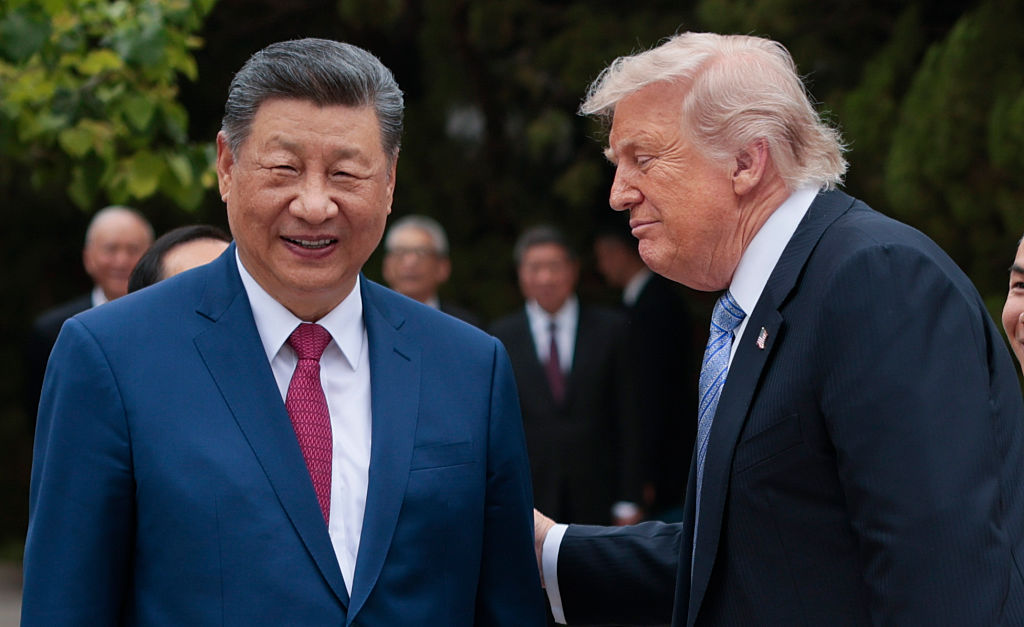
Reports sugget Zhipu AI  has released a new model that can rival leading US systems. Credit: Getty

Reports sugget Zhipu AI has released a new model that can rival leading US systems. Credit: Getty

July 1 2026 - 10:18am

China is trying to catch up with America on artificial intelligence. The Wall Street Journal has reported that Zhipu AI — one of China’s six “AI tiger” LLMs — has released a new model that can rival leading US systems, including Anthropic’s Mythos, in cybersecurity tasks such as pinpointing security bugs. While this marks a milestone in China’s drive to catch up with Western AI capabilities, strong performance on a single benchmark does not mean it has taken the lead. Chinese models still lag behind their Western counterparts in broader capabilities, such as autonomous operation. Skepticism is therefore warranted before resorting to hysterical conclusions, but complacency about the geopolitical implications of China’s AI advances would be an even greater mistake.

On the infrastructure side, Chinese AI is still constrained by access to advanced chips, with American labs way ahead in computing capacity as well as investment. Analysis from earlier this year suggests that Chinese models are likely to be at least a few months behind those in the US. But they are still continuing to make progress, or that the geopolitical importance of AI will be decided only by whose LLM has ventured deeper into the technological frontier. The practical applications of AI, countries’ to capture foreign markets, and the application of AI into the real economy will matter just as much.

Here, China may hold an advantage. As with its dominance across many critical supply chains, Beijing may not need to produce the most advanced AI systems — only those that are affordable and widely deployable. In doing so, it could consolidate global influence by supplying functional, low-cost AI at scale.

Beijing seems to be pursuing exactly that path, developing an AI “open-source” strategy that offers affordable, widely available AI models for companies and individuals to use and modify as they wish. The production of the DeepSeek AI model, which matched the performance of Silicon Valley tools such as ChatGPT at a fraction of the cost for users, created goodwill among Chinese models with developers.

The four most popular models on OpenRouter, an AI hardware platform for developers, are now all Chinese. The goal for China is not only to win the frontier-model race, but to make its systems the default layer of AI adoption across industries and global markets. For most economies, the choice is increasingly between an affordable tool they can deploy now and a more robust one that may be out of reach.

And while the countries adopting Chinese models may be exposed to political pressure and cyber threats from Beijing, safer and more capable alternatives matter little if they are unaffordable. American AI companies are already under pressure to monetize products whose operating costs are rising. If Chinese open-source models become the cheap default for startups, universities, governments and businesses across the developing world, then America’s AI lead will be eroded from below.

Perhaps more concerning for America in the long run is how AI can give Chinese manufacturing even more strength, through the ongoing integration of AI as a general-purpose technology. China’s new Five-Year Plan mentioned AI more than 50 times and includes an “AI+” action plan aimed at spreading AI across the economy.

Beijing has been pioneering automation of its critical infrastructure for years, with promising recent results in increasing warplane production capacity. In that regard, China’s open-model strategy and manufacturing dominance will reinforce each other. Cheap, adaptable models accelerate deployment across the real economy while those deployments generate real-world data and use cases that can feed back into further model improvement.

The United States should not dismiss the importance of its lead in the AI race. That lead worries Beijing, not least because a more automated Chinese economy would also become more vulnerable to AI-generated cyber threats. But nor should Washington assume that China cannot catch up with American capabilities over time.

This AI competition represents part of a broader struggle over tech supply chains and geopolitical influence. Decisions over whether to adopt US or Chinese models could produce a more fragmented global reality, with different regions relying on different cloud providers, chips and security structures. The result will likely be a global economy which is divided into competing spheres, rather than one which produces a single winner.


Miquel Vila is a political and geopolitical risk consultant focusing on industrial strategy, critical infrastructure and global supply chains.

miquelvilam