




X Close

Will Grok take over the US government?

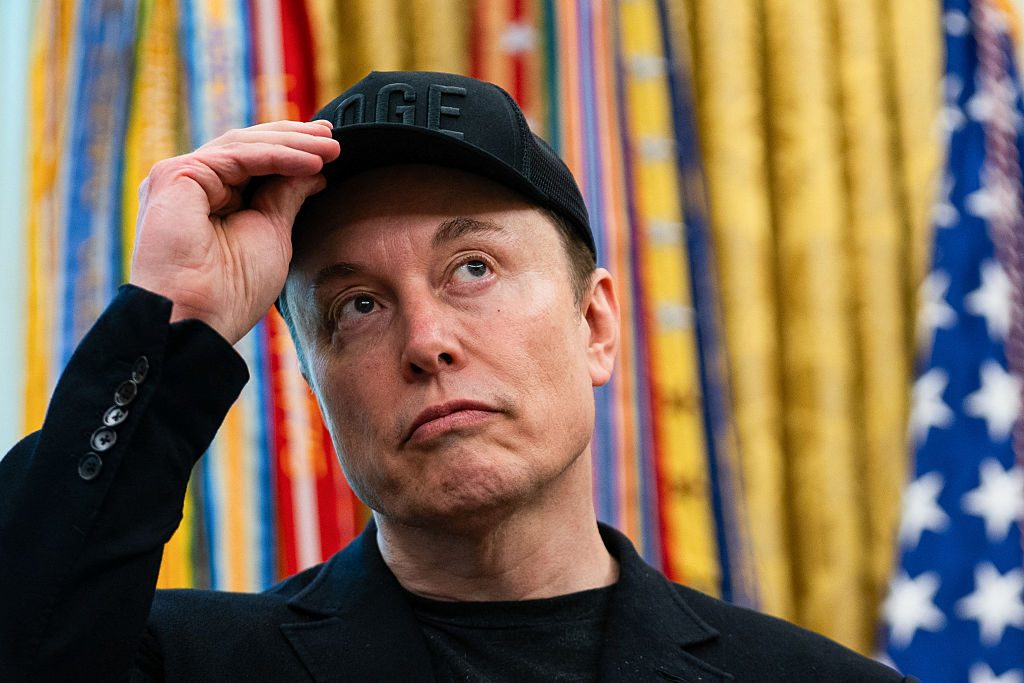
Despite his Trump feud, Musk's plan remains intact. Credit: Getty

Despite his Trump feud, Musk's plan remains intact. Credit: Getty

July 17 2025 - 10:00am

​​In his 2014 book, Zero to One, Peter Thiel set out his piquant views on the joy of monopolies. Unless you establish a moat around your business, he explained, in a mature market you’ll always have your returns competed away eventually. Unless, that is, you attach yourself to a single client with infinite pockets — normally the government.

It’s no surprise, then, that much of the world’s richest man’s wealth comes from government contracts. In February this year it was reported that Elon Musk’s SpaceX and Tesla have both received $38 billion in aid, funding and government orders over the last two decades. This week, in a similar vein, it was announced that his AI chatbot, Grok, would be used by the Department of Defense. Politico reported that the contract has a “$200 million ceiling” and would involve “custom AI-powered applications to accelerate use cases in health care, fundamental science and national security”.

This contract means it is pre-cleared to sell AI services to any government agency, and it doesn’t need to compete on an open bid every time. Despite Musk’s explosive falling out with Donald Trump, the tech mogul’s bigger strategic goal remains intact. The Trump administration has rescinded the Biden-era emphasis on “AI safety”, accepting the need to tool up. Now the race is on to fulfill the orders of everyone, from command-and-control at the Pentagon to search-and-cross-check at the patent office.

To that end, the “Big Four” in the market — Anthropic, Google, OpenAI and Musk’s xAI — have lately all been awarded contracts that will give them a role in building a new bureaucracy which can see round corners. The challenge is a potentially revolutionary one. Roughly, it is to take heaps of dusty old memos from 1981, or 1931, and connect that data in a way that can be “deep searched”. This would involve private databases of secure, often classified information, made accessible to those with authorization. That could be policing, environmental risk analysis, or forecasting the energy grid load. A big part of it will be fraud detection in benefits offices, procurement and taxes.

Of course, like many prior IT “revolutions”, it also has enormous potential to underwhelm. Perhaps sensing how easily this could all go wrong, the Federal Bureaucracy, under its Chief Digital and Artificial Intelligence Office, has taken the strategic view that it doesn’t want to be pinned down to one supplier just yet. But it’s likely that, over time, market dynamics will lead to one or maybe two companies dominating national infrastructure. And, in turn, whoever dominates will be an almost unsackable monopolist. How do you get rid of a system that all your operatives use every day? How do you un-enrich its data?

Grok now has a seat at the table, but it’s unclear who will eventually triumph. Besides the relative power of their models, each company is making a slightly different pitch: Anthropic emphasizes “safety”, and Google is leaning into its ability to make modular and adaptable systems. Grok, meanwhile, is looking towards metaphysics: xAI’s Katie Miller has taken to calling Grok “the only truth-seeking AI available to the US Government”. Truth or safety? Modularity or end-to-end integration? The values each embodies will in time calcify into their advantage.

Just as today we live in the internet laid down by Facebook and WordPress, not the one of MySpace and GeoCities, the bets made and contracts won in the next couple of years will come to shape the next two decades.

Gavin Haynes is a journalist and former editor-at-large at Vice.

@gavhaynes

China is threatening America in the AI race

Reports sugget Zhipu AI  has released a new model that can rival leading US systems. Credit: Getty

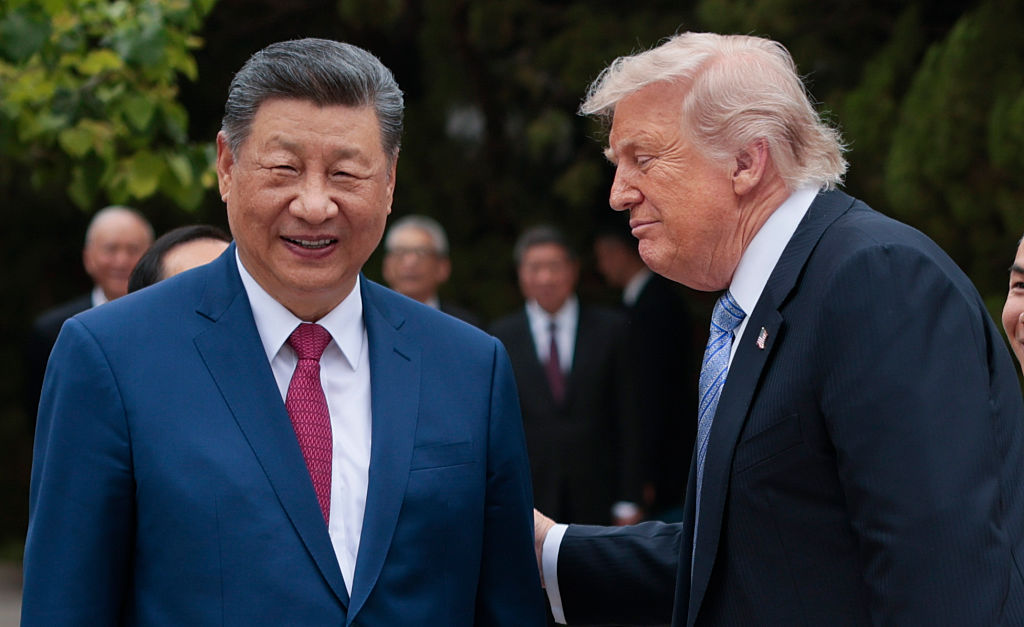
Reports sugget Zhipu AI has released a new model that can rival leading US systems. Credit: Getty

July 1 2026 - 10:18am

China is trying to catch up with America on artificial intelligence. The Wall Street Journal has reported that Zhipu AI — one of China’s six “AI tiger” LLMs — has released a new model that can rival leading US systems, including Anthropic’s Mythos, in cybersecurity tasks such as pinpointing security bugs. While this marks a milestone in China’s drive to catch up with Western AI capabilities, strong performance on a single benchmark does not mean it has taken the lead. Chinese models still lag behind their Western counterparts in broader capabilities, such as autonomous operation. Skepticism is therefore warranted before resorting to hysterical conclusions, but complacency about the geopolitical implications of China’s AI advances would be an even greater mistake.

On the infrastructure side, Chinese AI is still constrained by access to advanced chips, with American labs way ahead in computing capacity as well as investment. Analysis from earlier this year suggests that Chinese models are likely to be at least a few months behind those in the US. But they are still continuing to make progress, or that the geopolitical importance of AI will be decided only by whose LLM has ventured deeper into the technological frontier. The practical applications of AI, countries’ to capture foreign markets, and the application of AI into the real economy will matter just as much.

Here, China may hold an advantage. As with its dominance across many critical supply chains, Beijing may not need to produce the most advanced AI systems — only those that are affordable and widely deployable. In doing so, it could consolidate global influence by supplying functional, low-cost AI at scale.

Beijing seems to be pursuing exactly that path, developing an AI “open-source” strategy that offers affordable, widely available AI models for companies and individuals to use and modify as they wish. The production of the DeepSeek AI model, which matched the performance of Silicon Valley tools such as ChatGPT at a fraction of the cost for users, created goodwill among Chinese models with developers.

The four most popular models on OpenRouter, an AI hardware platform for developers, are now all Chinese. The goal for China is not only to win the frontier-model race, but to make its systems the default layer of AI adoption across industries and global markets. For most economies, the choice is increasingly between an affordable tool they can deploy now and a more robust one that may be out of reach.

And while the countries adopting Chinese models may be exposed to political pressure and cyber threats from Beijing, safer and more capable alternatives matter little if they are unaffordable. American AI companies are already under pressure to monetize products whose operating costs are rising. If Chinese open-source models become the cheap default for startups, universities, governments and businesses across the developing world, then America’s AI lead will be eroded from below.

Perhaps more concerning for America in the long run is how AI can give Chinese manufacturing even more strength, through the ongoing integration of AI as a general-purpose technology. China’s new Five-Year Plan mentioned AI more than 50 times and includes an “AI+” action plan aimed at spreading AI across the economy.

Beijing has been pioneering automation of its critical infrastructure for years, with promising recent results in increasing warplane production capacity. In that regard, China’s open-model strategy and manufacturing dominance will reinforce each other. Cheap, adaptable models accelerate deployment across the real economy while those deployments generate real-world data and use cases that can feed back into further model improvement.

The United States should not dismiss the importance of its lead in the AI race. That lead worries Beijing, not least because a more automated Chinese economy would also become more vulnerable to AI-generated cyber threats. But nor should Washington assume that China cannot catch up with American capabilities over time.

This AI competition represents part of a broader struggle over tech supply chains and geopolitical influence. Decisions over whether to adopt US or Chinese models could produce a more fragmented global reality, with different regions relying on different cloud providers, chips and security structures. The result will likely be a global economy which is divided into competing spheres, rather than one which produces a single winner.


Miquel Vila is a political and geopolitical risk consultant focusing on industrial strategy, critical infrastructure and global supply chains.

miquelvilam