


X Close

Trump tariffs will drive Brazil into the arms of China

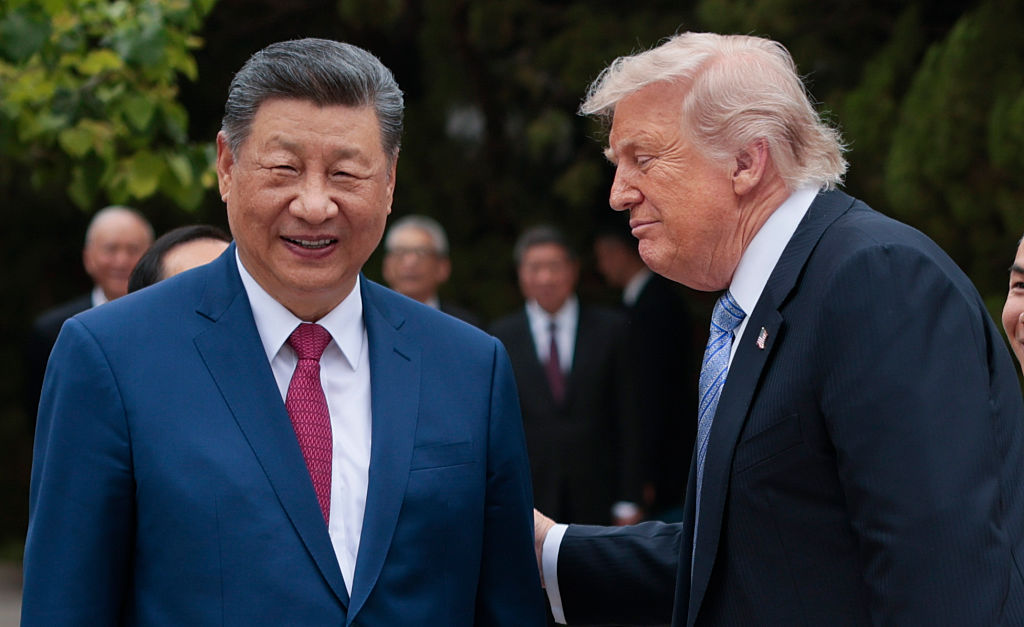
Punishing Brazil is easier than punishing China. Credit: Getty

Punishing Brazil is easier than punishing China. Credit: Getty

July 10 2025 - 9:30pm

US President Donald Trump’s imposition of 50% tariffs on all imports from Brazil, on top of any sectoral tariffs, has shocked the country — though not as much as might be expected. The market’s reaction, with a small decline for the Brazilian real against the dollar already reversing, tells its own tale. Rather, just as Trump’s stated aims are political, not economic, so it is the political consequences that matter more.

In Trump’s 9 July letter to Brazilian President Lula da Silva, the US leader cites a “Witch Hunt” (sic) against former president Jair Bolsonaro (2019-22). Bolsonaro, already barred from seeking office until 2030, is currently standing trial along with 80 other co-conspirators for allegedly attempting a coup in January 2023, a few months after his election defeat.

Trump additionally cites attacks on “the Fundamental Free Speech Rights of Americans” (sic), an apparent reference to a Brazilian Supreme Court ruling last month, whose result is that social media companies would be made responsible for criminal or offensive content on their networks. This follows an episode last year when X remained off-air for six weeks due to a conflict between the court and Elon Musk over content removal. As such, questions of free speech, justice, and national sovereignty have been thrown together in confusing ways.

Brazil is “a sovereign country with independent institutions that will not accept tutelage from anyone,” responded President Lula, while also emphasizing Bolsonaro’s trial was a matter for Brazilian justice. Brazil’s record on free speech online, it must be said, is poor, and does not benefit from the protections the US constitution affords — but it is ultimately a Brazilian matter. Moreover, it is a Congress dominated by the Right whose failure to legislate on the question that has prompted the Supreme Court to act. The situation is lamentable.

The Left has sought to pin the blame for the tariffs on Bolsonaro allies, with some justification. Congressman Eduardo Bolsonaro, the former president’s son who is close to conservative groups in the US, had lobbied the White House to put pressure on Brazil to save his father from a possible prison sentence, and yesterday thanked Trump for the tariffs. Lula’s center-left Workers Party is openly discussing impeaching the ostensible nationalist Eduardo Bolsonaro.

Jair Bolsonaro, meanwhile, is said to be considering lobbying the White House to reverse the tariffs — a way of taking back control of a narrative the Left is now dominating. This, then, would all be political theatre — a prelude to Trump doing what he has done in so many other cases and U-turning on the tariffs, with Bolsonaro emerging the big winner.

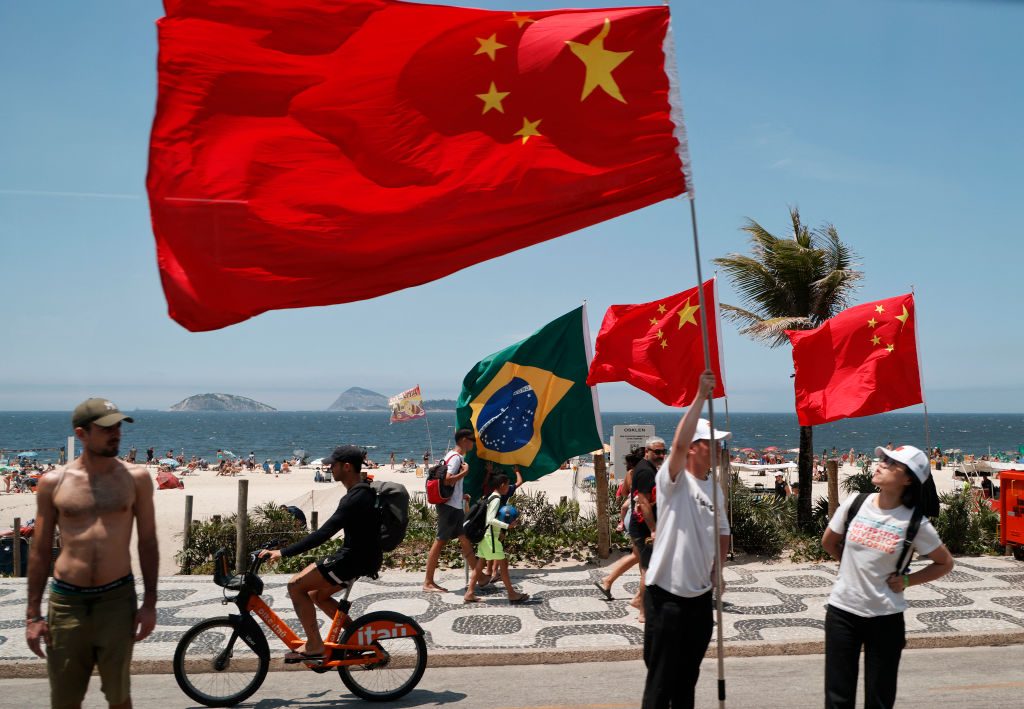
Behind domestic political tussles and accusations is the serious matter of international trade and alliances. Brazil has just hosted the Brics summit in Rio de Janeiro, with some reports maintaining that Trump’s true motivation is to punish the alliance for having criticised his indiscriminate and unilateral tariffs, and for making noises about alternatives to the dollar. Punishing Brazil is easier than punishing China — even though it is large, Brazil has little weight to throw around. This, combined with a history of balanced diplomacy, explains why it is one of the most enthusiastic and ideological members of the Brics. The tariff would thus send a message to any multipolarist pretenders.

As ever with Trump, though, we are dealing with a slew of tactics but little evident strategy. Playing fast and loose with tariffs is consistent with his quick win-no lose approach to international politics. The truth is that there is no real trade imbalance with Brazil: exports to the US total $20 billion, which is a touch below imports. Moreover, Brazil’s exports to the US are 12% of the total, way below the 26% to China, and still below the 16% to the EU. With one important exception (Embraer aircraft), much of Brazil’s exports to the US are raw commodities or semi-finished goods (oil, steel, coffee, beef) — exports that would readily find other buyers. The 50% tariffs on Brazilian exports would see China the winner, not the US.

No one can yet tell how this will play out and whether the tariffs will indeed come into effect on 1 August as declared. But Trump’s attempt to meddle in Brazilian affairs has already exposed how so many declared nationalists, in North and South America, have little concern for the sovereignty they are meant to defend.


Alex Hochuli is a writer based in São Paulo. He hosts the Aufhebunga Bunga podcast and is co-author of The End of the End of History: Politics in the 21st Century.

Alex__1789

China is threatening America in the AI race

Reports sugget Zhipu AI  has released a new model that can rival leading US systems. Credit: Getty

Reports sugget Zhipu AI has released a new model that can rival leading US systems. Credit: Getty

July 1 2026 - 10:18am

China is trying to catch up with America on artificial intelligence. The Wall Street Journal has reported that Zhipu AI — one of China’s six “AI tiger” LLMs — has released a new model that can rival leading US systems, including Anthropic’s Mythos, in cybersecurity tasks such as pinpointing security bugs. While this marks a milestone in China’s drive to catch up with Western AI capabilities, strong performance on a single benchmark does not mean it has taken the lead. Chinese models still lag behind their Western counterparts in broader capabilities, such as autonomous operation. Skepticism is therefore warranted before resorting to hysterical conclusions, but complacency about the geopolitical implications of China’s AI advances would be an even greater mistake.

On the infrastructure side, Chinese AI is still constrained by access to advanced chips, with American labs way ahead in computing capacity as well as investment. Analysis from earlier this year suggests that Chinese models are likely to be at least a few months behind those in the US. But they are still continuing to make progress, or that the geopolitical importance of AI will be decided only by whose LLM has ventured deeper into the technological frontier. The practical applications of AI, countries’ to capture foreign markets, and the application of AI into the real economy will matter just as much.

Here, China may hold an advantage. As with its dominance across many critical supply chains, Beijing may not need to produce the most advanced AI systems — only those that are affordable and widely deployable. In doing so, it could consolidate global influence by supplying functional, low-cost AI at scale.

Beijing seems to be pursuing exactly that path, developing an AI “open-source” strategy that offers affordable, widely available AI models for companies and individuals to use and modify as they wish. The production of the DeepSeek AI model, which matched the performance of Silicon Valley tools such as ChatGPT at a fraction of the cost for users, created goodwill among Chinese models with developers.

The four most popular models on OpenRouter, an AI hardware platform for developers, are now all Chinese. The goal for China is not only to win the frontier-model race, but to make its systems the default layer of AI adoption across industries and global markets. For most economies, the choice is increasingly between an affordable tool they can deploy now and a more robust one that may be out of reach.

And while the countries adopting Chinese models may be exposed to political pressure and cyber threats from Beijing, safer and more capable alternatives matter little if they are unaffordable. American AI companies are already under pressure to monetize products whose operating costs are rising. If Chinese open-source models become the cheap default for startups, universities, governments and businesses across the developing world, then America’s AI lead will be eroded from below.

Perhaps more concerning for America in the long run is how AI can give Chinese manufacturing even more strength, through the ongoing integration of AI as a general-purpose technology. China’s new Five-Year Plan mentioned AI more than 50 times and includes an “AI+” action plan aimed at spreading AI across the economy.

Beijing has been pioneering automation of its critical infrastructure for years, with promising recent results in increasing warplane production capacity. In that regard, China’s open-model strategy and manufacturing dominance will reinforce each other. Cheap, adaptable models accelerate deployment across the real economy while those deployments generate real-world data and use cases that can feed back into further model improvement.

The United States should not dismiss the importance of its lead in the AI race. That lead worries Beijing, not least because a more automated Chinese economy would also become more vulnerable to AI-generated cyber threats. But nor should Washington assume that China cannot catch up with American capabilities over time.

This AI competition represents part of a broader struggle over tech supply chains and geopolitical influence. Decisions over whether to adopt US or Chinese models could produce a more fragmented global reality, with different regions relying on different cloud providers, chips and security structures. The result will likely be a global economy which is divided into competing spheres, rather than one which produces a single winner.


Miquel Vila is a political and geopolitical risk consultant focusing on industrial strategy, critical infrastructure and global supply chains.

miquelvilam