




X Close

Mark Carney passes the first Trump test

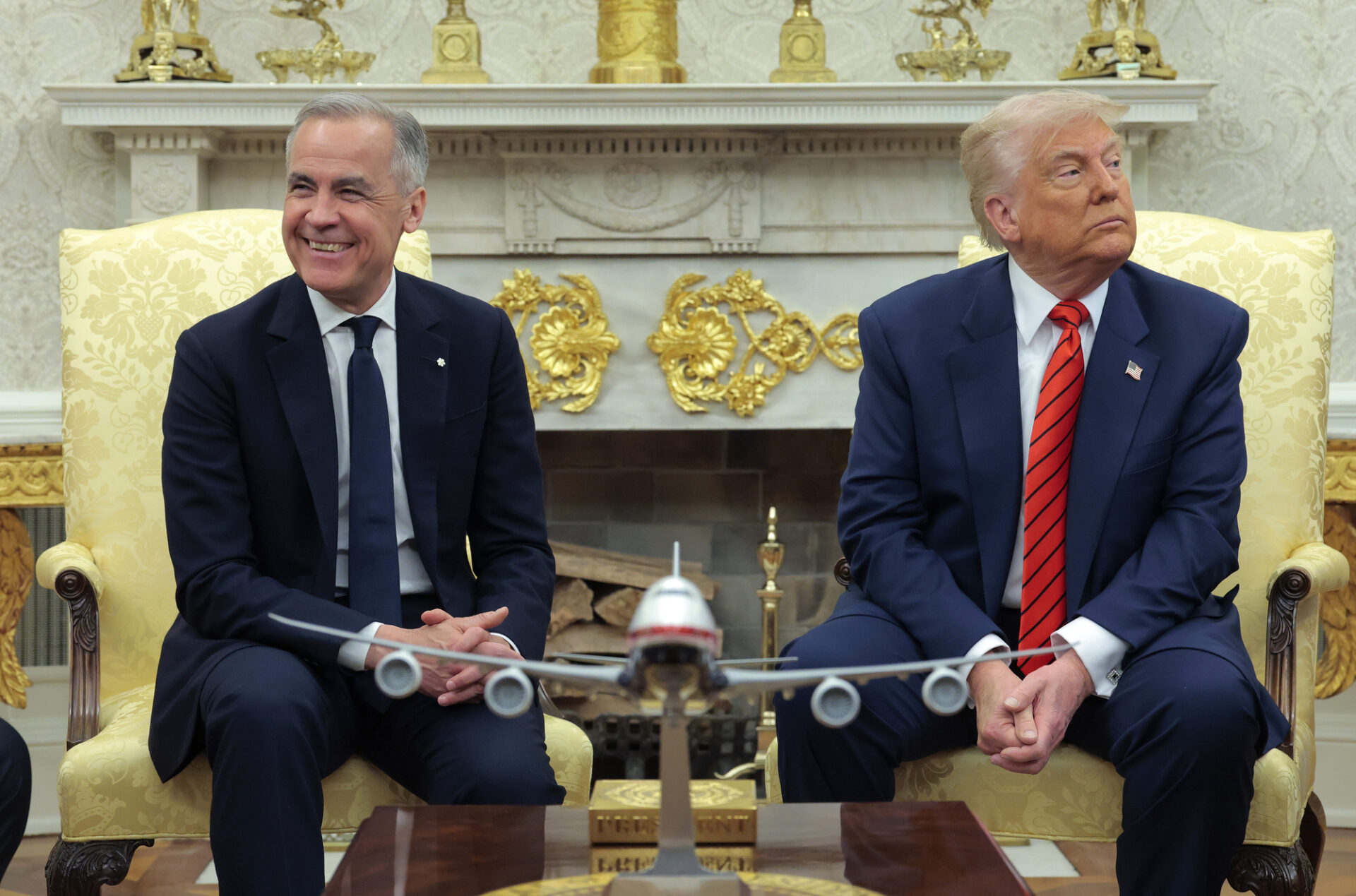
The exchanges between the two leaders were civil and pleasant. Credit: Getty

The exchanges between the two leaders were civil and pleasant. Credit: Getty

May 6 2025 - 8:00pm

With a nation’s hopes and fears resting on him, Canada’s Prime Minister Mark Carney met with Donald Trump at the White House for the first time as a fellow head of government. Recalling Justin Trudeau’s first visit in 2017, observers were looking for cues as to how Trump might seek to intimidate Carney, such as through an excessively forceful handshake or an outrageous remark, but the optics and soundbites were (largely) uneventful.

In fact, the exchanges between the two leaders were remarkably civil and pleasant. That is, despite the dire threats hanging over the Canadian delegation, with the President offering effusive congratulations on Carney’s election win and even taking credit for it as “the greatest thing to happen” to the ruling Liberals (“the greatest comeback…perhaps even greater than mine”).

Some Canadians feared an “ambush” like what happened to Ukraine’s Zelensky, but instead there was praise for the PM. Although Trump did discuss Canada’s potential as “the 51st state”, Carney held firm, reminding the President that “in real estate, some things are never for sale”. When reporters asked about tariffs, Trump refused to budge and repeated his claim that the US was subsidizing Canada, while Carney asserted that Canada was America’s “biggest client”. In terms of tone, however, Trump seemed to go out of his way to express “a lot of respect” and underline “friendship” as the basis of his approach to the Carney government, while also alluding to “the bad relationship” with his predecessors, as if to say it was a thing of the past.

Canada’s leader had originally pledged to meet his American counterpart only when the latter showed “respect for Canadian sovereignty”. Though nothing has really changed since these comments, Carney chose to engage with the President anyway; the two North American countries, after all, must come to some kind of rapprochement even as they chart divergent economic courses.

For instance, Canada may wish to deepen trade ties with Europe or Asia, but it still is joined at the hip with the US economy across a range of key industries like autos, steel, and lumber. In addition, the US may wish to assert energy independence, but its energy infrastructure is structurally linked with cheap and abundant Canadian crude, which it receives at a discount. As the leader of the smaller economy, Carney knows this, and Trump seems willing to listen. Judging by Trump’s accommodating tone, the unlikely personal rapport between the two may prove to be a solid enough foundation to achieve a new settlement beyond the terms of the 2018 USMCA.

As to what this could potentially look like down the line, Canada and the United States may end up retaining most of their close integration on legacy industries like existing car manufacturing while branching out from each other on new and emerging industries like nuclear energy or next-generation manufacturing. In fact, Carney ran on enacting just such an arrangement.

In the meantime, he will have to hope for more similarly amicable interactions with Trump where he can assuage the President’s ego and minimize the damage to his country’s interests. This is why Carney’s budding rapport with Trump is more than diplomatic theatre — it’s a high-stakes balancing act between deference and defiance. If he can continue to charm the President while holding the line on sovereignty, this unlikely partnership could reshape North American trade on not just America’s terms, but Canada’s too.

Michael Cuenco is Senior Editor at American Affairs.
1TrueCuencoism

China is threatening America in the AI race

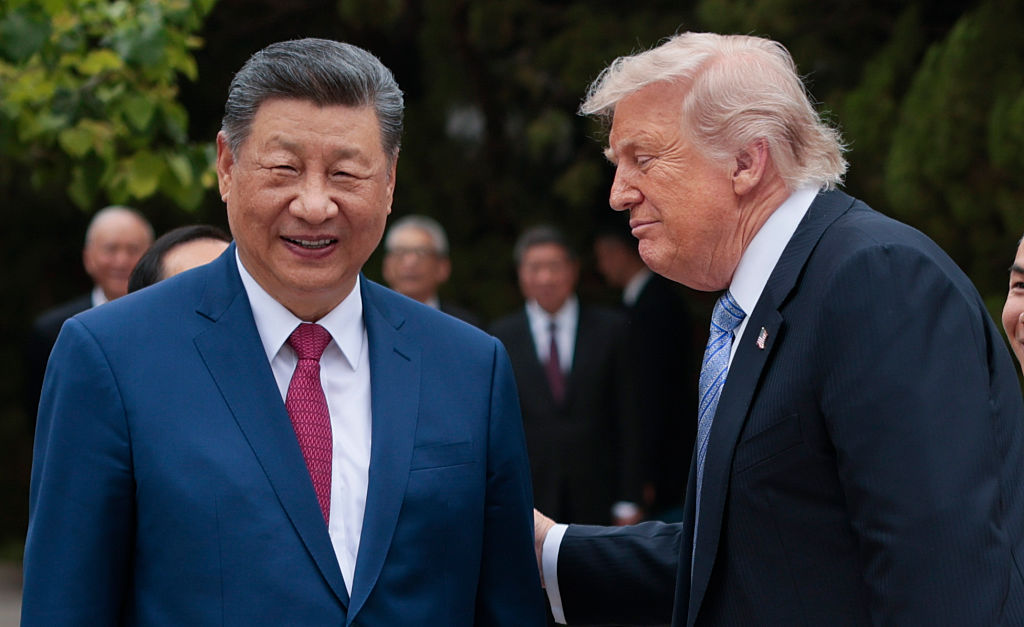
Reports sugget Zhipu AI  has released a new model that can rival leading US systems. Credit: Getty

Reports sugget Zhipu AI has released a new model that can rival leading US systems. Credit: Getty

July 1 2026 - 10:18am

China is trying to catch up with America on artificial intelligence. The Wall Street Journal has reported that Zhipu AI — one of China’s six “AI tiger” LLMs — has released a new model that can rival leading US systems, including Anthropic’s Mythos, in cybersecurity tasks such as pinpointing security bugs. While this marks a milestone in China’s drive to catch up with Western AI capabilities, strong performance on a single benchmark does not mean it has taken the lead. Chinese models still lag behind their Western counterparts in broader capabilities, such as autonomous operation. Skepticism is therefore warranted before resorting to hysterical conclusions, but complacency about the geopolitical implications of China’s AI advances would be an even greater mistake.

On the infrastructure side, Chinese AI is still constrained by access to advanced chips, with American labs way ahead in computing capacity as well as investment. Analysis from earlier this year suggests that Chinese models are likely to be at least a few months behind those in the US. But they are still continuing to make progress, or that the geopolitical importance of AI will be decided only by whose LLM has ventured deeper into the technological frontier. The practical applications of AI, countries’ to capture foreign markets, and the application of AI into the real economy will matter just as much.

Here, China may hold an advantage. As with its dominance across many critical supply chains, Beijing may not need to produce the most advanced AI systems — only those that are affordable and widely deployable. In doing so, it could consolidate global influence by supplying functional, low-cost AI at scale.

Beijing seems to be pursuing exactly that path, developing an AI “open-source” strategy that offers affordable, widely available AI models for companies and individuals to use and modify as they wish. The production of the DeepSeek AI model, which matched the performance of Silicon Valley tools such as ChatGPT at a fraction of the cost for users, created goodwill among Chinese models with developers.

The four most popular models on OpenRouter, an AI hardware platform for developers, are now all Chinese. The goal for China is not only to win the frontier-model race, but to make its systems the default layer of AI adoption across industries and global markets. For most economies, the choice is increasingly between an affordable tool they can deploy now and a more robust one that may be out of reach.

And while the countries adopting Chinese models may be exposed to political pressure and cyber threats from Beijing, safer and more capable alternatives matter little if they are unaffordable. American AI companies are already under pressure to monetize products whose operating costs are rising. If Chinese open-source models become the cheap default for startups, universities, governments and businesses across the developing world, then America’s AI lead will be eroded from below.

Perhaps more concerning for America in the long run is how AI can give Chinese manufacturing even more strength, through the ongoing integration of AI as a general-purpose technology. China’s new Five-Year Plan mentioned AI more than 50 times and includes an “AI+” action plan aimed at spreading AI across the economy.

Beijing has been pioneering automation of its critical infrastructure for years, with promising recent results in increasing warplane production capacity. In that regard, China’s open-model strategy and manufacturing dominance will reinforce each other. Cheap, adaptable models accelerate deployment across the real economy while those deployments generate real-world data and use cases that can feed back into further model improvement.

The United States should not dismiss the importance of its lead in the AI race. That lead worries Beijing, not least because a more automated Chinese economy would also become more vulnerable to AI-generated cyber threats. But nor should Washington assume that China cannot catch up with American capabilities over time.

This AI competition represents part of a broader struggle over tech supply chains and geopolitical influence. Decisions over whether to adopt US or Chinese models could produce a more fragmented global reality, with different regions relying on different cloud providers, chips and security structures. The result will likely be a global economy which is divided into competing spheres, rather than one which produces a single winner.


Miquel Vila is a political and geopolitical risk consultant focusing on industrial strategy, critical infrastructure and global supply chains.

miquelvilam