



X Close

Can Democrats exploit Trump’s tariff chaos?

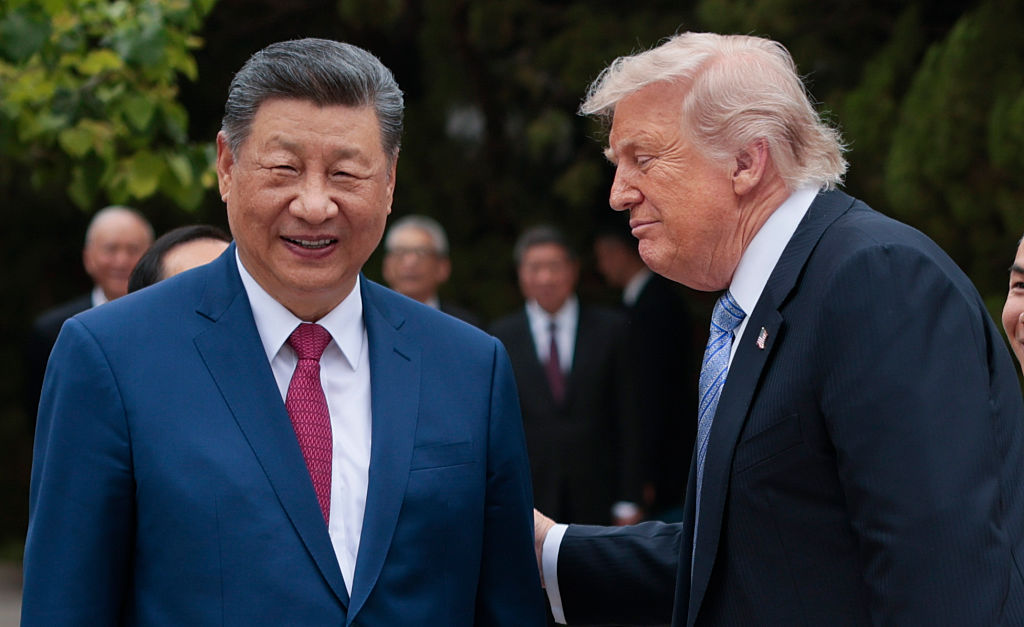
The President is risking accusations that he is prioritising wealthy donors. Credit: Getty

The President is risking accusations that he is prioritising wealthy donors. Credit: Getty

April 16 2025 - 4:45pm

As with many political movements, MAGA represents a fragile coalition of groups that often have little in common — and, at the extremes, may even detest one another.

This tension has been brought into clearer focus by Trump’s recent exemption of tech products from tariffs, a decision likely influenced by the oligarchs in the President’s corner. After all, firms like Apple depend largely on Chinese manufacturers, while Wall Street investors still see the Middle Kingdom as a potential source of future profits. In contrast, smaller firms — such as those who import toys or furniture — enjoy no such protection.

Clearly, the tariff proposals are far less popular than Trump’s moves on such things as the border, gender and the crackdown on universities. Indeed, tariffs are opposed by most Americans and are clearly eroding his support base even as many back protecting US manufacturing.

It is too early to see the impact of tariffs on ordinary people, but it’s not hard to see that higher prices for household utensils, clothing and even food are likely to affect them. Perhaps most disruptive will be the cost of imported cars — a mainstay of many families — which could rise several thousand dollars. Inflation did much to undermine Biden’s Administration, and Trump could suffer a similar fate.

Of course, these exemptions might be mitigated over time as companies adjust to domestic manufacturing or even break their dependency on China. Some companies — such as Nvidia — are already responding by promising to build up to $500 billion worth of artificial intelligence infrastructure in the US over the next four years. The problem, though, may be timing; it takes three to five years to build a new semiconductor plant, and the results may not be felt for several more.

Nevertheless, with these exemptions, Trump risks appearing as though he is giving preferential treatment to his wealthy donors. In theory, this should provide an opening for Democrats. Trump’s great achievement over the last decade has been to win over working-class voters; for the first time in decades, Americans are more likely to identify the GOP with the people than the Democrats. But Trump’s polling on his handling of the economy — a proxy for tariffs — is now underwater, and the Democrats have an opportunity to reassert themselves as the party of common sense.

To accomplish this, the Democrats need to jettison much of their highly unpopular cultural agenda on issues like reparations, transgenderism, climate change and race quotas. Embracing libertarian fantasies about “free trade” is not the answer to public concerns, but making the case for a gradual, step-by-step policy that keeps the economy running through a reindustrializing transition will be more appealing than Trumpian shock therapy.

Essentially, the Democrats can gain back their lost voters by adopting some MAGA themes but with more intelligence and less revanchism. MAGA lacks cohesion, and divisions between oligarchs and plebeians make it highly vulnerable to an intelligent, working-class-oriented alternative.

In his inimitable way, Trump’s erratic and, for now, painful tariff policies are opening the door to reclaiming much of their historic base. Timing matters here because tariff pain means that

it will take years to see the benefits of reshoring. But this requires Democrats not becoming neoliberals but more of the old-fashioned kind: one that prioritizes the interests and futures of the vast majority of ordinary Americans.


Joel Kotkin is a Presidential Fellow in Urban Futures at Chapman University and a Senior Research Fellow at the Civitas Institute, the University of Texas at Austin.

joelkotkin

China is threatening America in the AI race

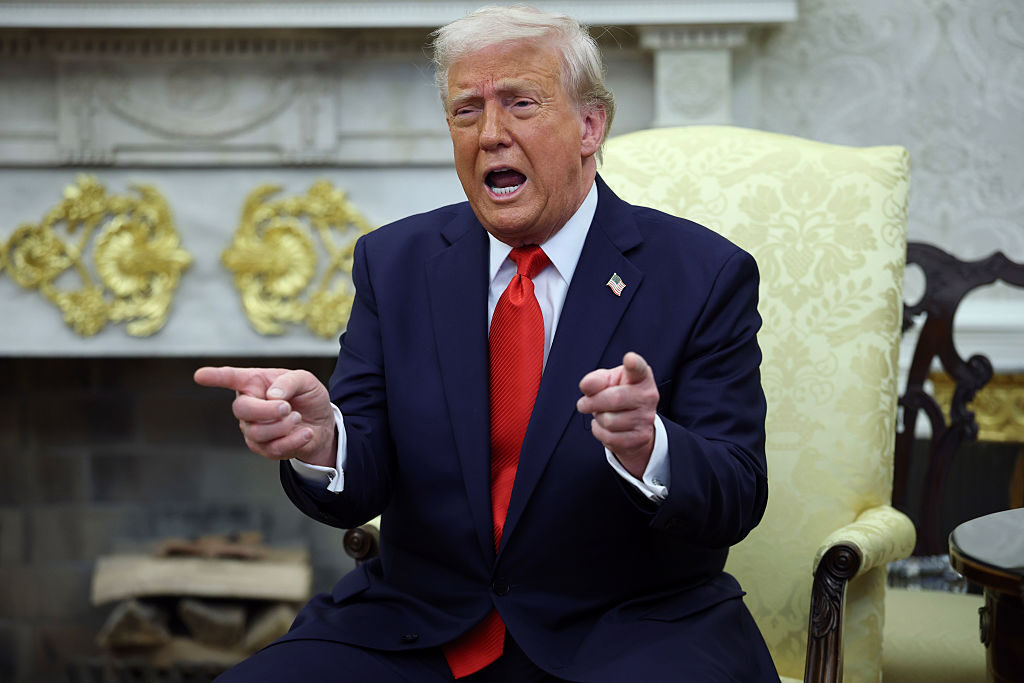
Reports sugget Zhipu AI  has released a new model that can rival leading US systems. Credit: Getty

Reports sugget Zhipu AI has released a new model that can rival leading US systems. Credit: Getty

July 1 2026 - 10:18am

China is trying to catch up with America on artificial intelligence. The Wall Street Journal has reported that Zhipu AI — one of China’s six “AI tiger” LLMs — has released a new model that can rival leading US systems, including Anthropic’s Mythos, in cybersecurity tasks such as pinpointing security bugs. While this marks a milestone in China’s drive to catch up with Western AI capabilities, strong performance on a single benchmark does not mean it has taken the lead. Chinese models still lag behind their Western counterparts in broader capabilities, such as autonomous operation. Skepticism is therefore warranted before resorting to hysterical conclusions, but complacency about the geopolitical implications of China’s AI advances would be an even greater mistake.

On the infrastructure side, Chinese AI is still constrained by access to advanced chips, with American labs way ahead in computing capacity as well as investment. Analysis from earlier this year suggests that Chinese models are likely to be at least a few months behind those in the US. But they are still continuing to make progress, or that the geopolitical importance of AI will be decided only by whose LLM has ventured deeper into the technological frontier. The practical applications of AI, countries’ to capture foreign markets, and the application of AI into the real economy will matter just as much.

Here, China may hold an advantage. As with its dominance across many critical supply chains, Beijing may not need to produce the most advanced AI systems — only those that are affordable and widely deployable. In doing so, it could consolidate global influence by supplying functional, low-cost AI at scale.

Beijing seems to be pursuing exactly that path, developing an AI “open-source” strategy that offers affordable, widely available AI models for companies and individuals to use and modify as they wish. The production of the DeepSeek AI model, which matched the performance of Silicon Valley tools such as ChatGPT at a fraction of the cost for users, created goodwill among Chinese models with developers.

The four most popular models on OpenRouter, an AI hardware platform for developers, are now all Chinese. The goal for China is not only to win the frontier-model race, but to make its systems the default layer of AI adoption across industries and global markets. For most economies, the choice is increasingly between an affordable tool they can deploy now and a more robust one that may be out of reach.

And while the countries adopting Chinese models may be exposed to political pressure and cyber threats from Beijing, safer and more capable alternatives matter little if they are unaffordable. American AI companies are already under pressure to monetize products whose operating costs are rising. If Chinese open-source models become the cheap default for startups, universities, governments and businesses across the developing world, then America’s AI lead will be eroded from below.

Perhaps more concerning for America in the long run is how AI can give Chinese manufacturing even more strength, through the ongoing integration of AI as a general-purpose technology. China’s new Five-Year Plan mentioned AI more than 50 times and includes an “AI+” action plan aimed at spreading AI across the economy.

Beijing has been pioneering automation of its critical infrastructure for years, with promising recent results in increasing warplane production capacity. In that regard, China’s open-model strategy and manufacturing dominance will reinforce each other. Cheap, adaptable models accelerate deployment across the real economy while those deployments generate real-world data and use cases that can feed back into further model improvement.

The United States should not dismiss the importance of its lead in the AI race. That lead worries Beijing, not least because a more automated Chinese economy would also become more vulnerable to AI-generated cyber threats. But nor should Washington assume that China cannot catch up with American capabilities over time.

This AI competition represents part of a broader struggle over tech supply chains and geopolitical influence. Decisions over whether to adopt US or Chinese models could produce a more fragmented global reality, with different regions relying on different cloud providers, chips and security structures. The result will likely be a global economy which is divided into competing spheres, rather than one which produces a single winner.


Miquel Vila is a political and geopolitical risk consultant focusing on industrial strategy, critical infrastructure and global supply chains.

miquelvilam