

X Close

Why the Catholic Church is embracing anime

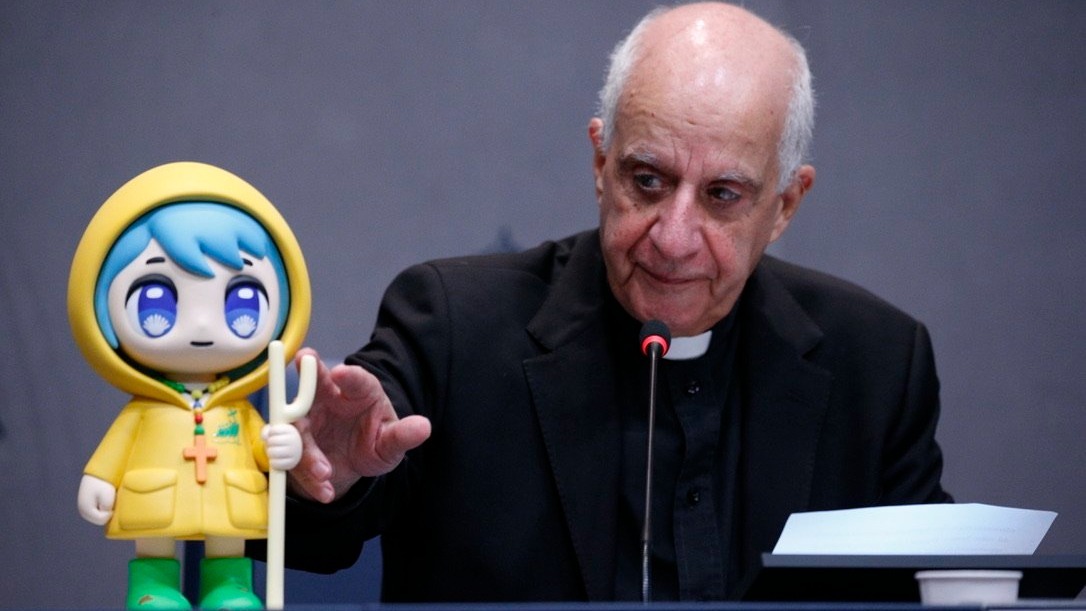
The new face of Catholicism? Credit: CatholicTV/X

The new face of Catholicism? Credit: CatholicTV/X

October 31 2024 - 7:15pm

Earlier this week, the Vatican unveiled Luce: a cheerful little girl with big eyes, blue hair, and a yellow raincoat. Introduced as the mascot for both the 2025 Jubilee year and the Vatican’s pavilion at Expo 2025, she represents what Archbishop Rino Fisichella, the Vatican’s chief Jubilee organizer, describes as an effort to appeal to younger generations. Most importantly, though, Luce is an anime girl.

The choice of a “kawaii” anime girl isn’t arbitrary. While Luce is certainly a nod to the World Expo’s 2025 location of Osaka in Japan, anime has also emerged in the last decade as a global cultural lingua franca. From Saudi Arabia, which has invested in its own anime production initiatives, to major anime conventions across the Philippines, Mexico, Brazil, and India, anime’s influence transcends Japan’s broader decline in soft power. Anime, in many ways, has become bigger than Japan itself. The whole world loves anime now, and its visual language crosses borders with an ease matched only by the likes of Elvis or Marilyn Monroe.

This timing coincides with Catholicism’s significant demographic shifts. While Europe has lost approximately 461,000 Catholics, the global Catholic population has grown by 13.7 million to reach 1.39 billion, with Africa alone gaining 7.3 million new Catholics and expansion in Asia. Catholicism is growing — just not in Europe or North America, where pews remain comparatively empty.

Curiously, though, the American and British media have spent the last three years breathlessly reporting on a supposed Gen-Z Catholic revival, from the faux TradCaths of Dimes Square to #CatholicCore on TikTok to Nick Fuentes’s far-Right following and #tradwives across social platforms. There are even a few “guru” priests in the mix, such as the controversial Father Mathieu Jasseron, who boasts 1.2 million followers. We’ve been hearing since 2021 that Zoomers love Catholicism.

Yet this fascination hasn’t translated into religious participation, not even in Traditional Latin Mass which is — or at least was — apparently “surging” in popularity. Generation Z shows historically low rates of religious engagement: 34% are religiously unaffiliated, and 38% never attend religious services. The enthusiasm for mantillas or rosaries as “aesthetic” hasn’t led to increased religious practice. Instead, traditional Catholic imagery has become another element in fast fashion, stripped of its spiritual significance. Or maybe the situation is even more dire than that: Catholicism been used as a prop to play-act religion, without any genuine investment. It’s all fun and games until you have to go to confession and be honest about all the “premarital” you’ve been having.

Still, these blips on the radar — these aesthetic trends, the Catholic imagery on social media, the memes — could have been capitalized on by the Vatican. A wink to the audience, an exhortation that maybe instead of wearing your rosary as a necklace, you should try praying sometimes. But no exhortations are to be found, not this year, nor when Catholicism was going viral three years ago. Its flash-in-the-pan aesthetic resonance in the early 2020s seemed to only be appealing to the press.

The Vatican’s apparent disinterest in seizing on social media’s Catholic fever suggests either unawareness or, more likely, a deliberate choice to pursue a more global strategy, which is where Luce enters the picture. While Americans and Europeans consume anime enthusiastically, so does the rest of the world, making it truly Catholic in reach. This universal appeal mirrors the Church’s own aspirations to universality, making anime an unexpectedly appropriate medium for Catholic messaging.

Such restraint in not chasing Western social media trends might not be a missed opportunity. While these trends are great TikTok fodder, they remain fundamentally Western. So, American girls are donning mantillas and Sabrina Carpenter is doing her sexy Madonna role play: this is all peripheral to Catholicism’s future. In this light, Luce represents something more significant than just another marketing strategy. She embodies the Church’s recognition that its future vitality depends on its ability to communicate across cultural boundaries while maintaining its essential message.

Whether Luce succeeds in her mission to engage young Catholics worldwide remains to be seen. But the Church is willing to take a chance on her.


Katherine Dee is a writer. To read more of her work, visit defaultfriend.substack.com.

default_friend

China is threatening America in the AI race

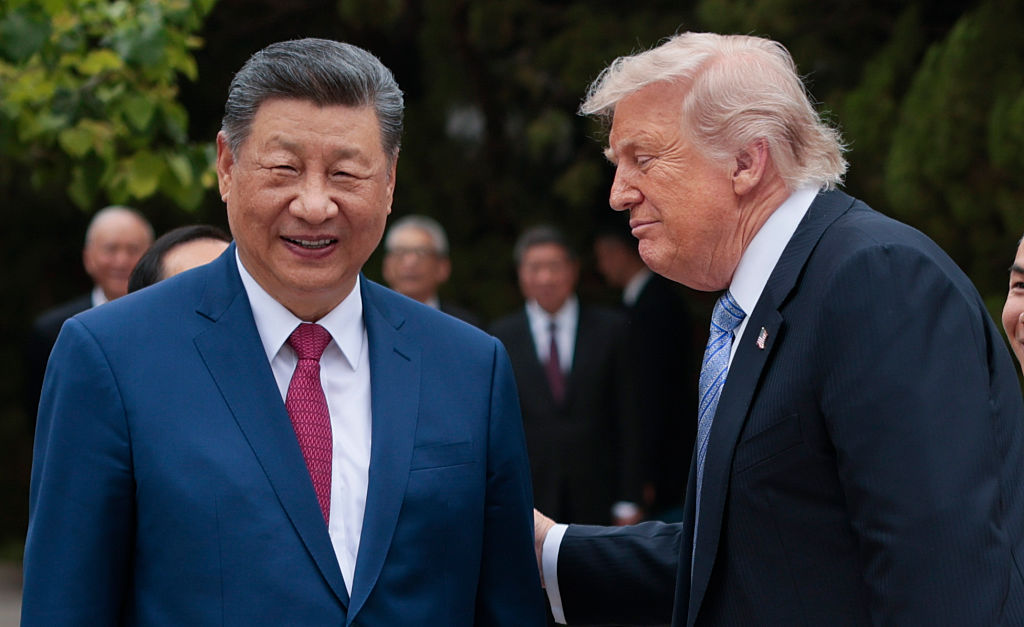
Reports sugget Zhipu AI  has released a new model that can rival leading US systems. Credit: Getty

Reports sugget Zhipu AI has released a new model that can rival leading US systems. Credit: Getty

July 1 2026 - 10:18am

China is trying to catch up with America on artificial intelligence. The Wall Street Journal has reported that Zhipu AI — one of China’s six “AI tiger” LLMs — has released a new model that can rival leading US systems, including Anthropic’s Mythos, in cybersecurity tasks such as pinpointing security bugs. While this marks a milestone in China’s drive to catch up with Western AI capabilities, strong performance on a single benchmark does not mean it has taken the lead. Chinese models still lag behind their Western counterparts in broader capabilities, such as autonomous operation. Skepticism is therefore warranted before resorting to hysterical conclusions, but complacency about the geopolitical implications of China’s AI advances would be an even greater mistake.

On the infrastructure side, Chinese AI is still constrained by access to advanced chips, with American labs way ahead in computing capacity as well as investment. Analysis from earlier this year suggests that Chinese models are likely to be at least a few months behind those in the US. But they are still continuing to make progress, or that the geopolitical importance of AI will be decided only by whose LLM has ventured deeper into the technological frontier. The practical applications of AI, countries’ to capture foreign markets, and the application of AI into the real economy will matter just as much.

Here, China may hold an advantage. As with its dominance across many critical supply chains, Beijing may not need to produce the most advanced AI systems — only those that are affordable and widely deployable. In doing so, it could consolidate global influence by supplying functional, low-cost AI at scale.

Beijing seems to be pursuing exactly that path, developing an AI “open-source” strategy that offers affordable, widely available AI models for companies and individuals to use and modify as they wish. The production of the DeepSeek AI model, which matched the performance of Silicon Valley tools such as ChatGPT at a fraction of the cost for users, created goodwill among Chinese models with developers.

The four most popular models on OpenRouter, an AI hardware platform for developers, are now all Chinese. The goal for China is not only to win the frontier-model race, but to make its systems the default layer of AI adoption across industries and global markets. For most economies, the choice is increasingly between an affordable tool they can deploy now and a more robust one that may be out of reach.

And while the countries adopting Chinese models may be exposed to political pressure and cyber threats from Beijing, safer and more capable alternatives matter little if they are unaffordable. American AI companies are already under pressure to monetize products whose operating costs are rising. If Chinese open-source models become the cheap default for startups, universities, governments and businesses across the developing world, then America’s AI lead will be eroded from below.

Perhaps more concerning for America in the long run is how AI can give Chinese manufacturing even more strength, through the ongoing integration of AI as a general-purpose technology. China’s new Five-Year Plan mentioned AI more than 50 times and includes an “AI+” action plan aimed at spreading AI across the economy.

Beijing has been pioneering automation of its critical infrastructure for years, with promising recent results in increasing warplane production capacity. In that regard, China’s open-model strategy and manufacturing dominance will reinforce each other. Cheap, adaptable models accelerate deployment across the real economy while those deployments generate real-world data and use cases that can feed back into further model improvement.

The United States should not dismiss the importance of its lead in the AI race. That lead worries Beijing, not least because a more automated Chinese economy would also become more vulnerable to AI-generated cyber threats. But nor should Washington assume that China cannot catch up with American capabilities over time.

This AI competition represents part of a broader struggle over tech supply chains and geopolitical influence. Decisions over whether to adopt US or Chinese models could produce a more fragmented global reality, with different regions relying on different cloud providers, chips and security structures. The result will likely be a global economy which is divided into competing spheres, rather than one which produces a single winner.


Miquel Vila is a political and geopolitical risk consultant focusing on industrial strategy, critical infrastructure and global supply chains.

miquelvilam