




X Close

Screening embryos for IQ: the latest frontier of baby engineering

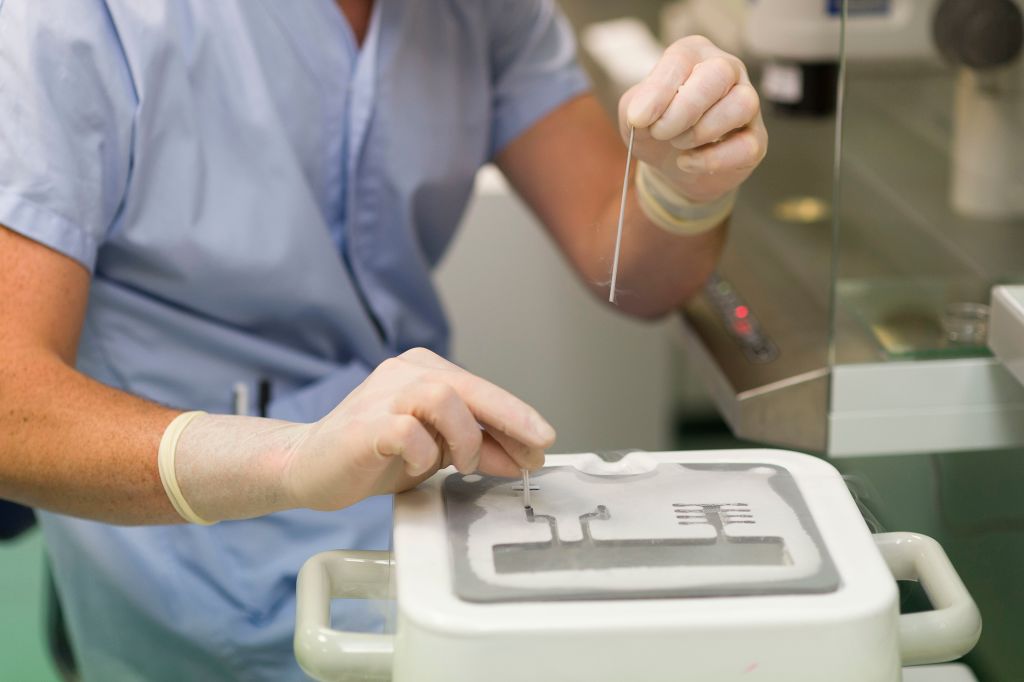
How far should parents engineer their own offspring? Credit: Getty

How far should parents engineer their own offspring? Credit: Getty

October 21 2024 - 11:50am

An American start-up is now offering embryo screening for IQ, plus ‘the other naughty traits everyone wants’ to know about, including sex, obesity, and propensity to mental illness. The company, Heliospect, is the latest in a wave of offerings that promise parents the power to engineer their own offspring: a prospect that raises a host of new philosophical, political, and interpersonal questions. Meanwhile, the origin of the story, in footage recorded as part of an undercover investigation by the Guardian and ‘antifascist’ doxxing ring Hope Not Hate, points toward a new conservatism of the Left — albeit one that will likely prove as futile in the face of technological change as its Right-wing predecessor.

Heliospect’s product is, according to the report, still in ‘stealth mode’. While it doesn’t provide IVF services, it promises ‘pre-implantation genetic screening’ of existing fertilized embryos based on data supplied by prospective parents. The news of a commercial company offering this service has triggered fears on both Left and Right, concerning human stratification via the ‘rise of the superbaby‘, as well as the objectification implicit in treating humans as plastic material for engineering: Hope Not Hate’s report warns of ‘a new age of eugenics’.

We might also ask: how would such expensive interventions affect the parents’ relationship to, or expectations of, the resulting child? There isn’t a one-to-one relationship between genetic code and genetic expression, meaning we’re not ‘programmed’ by our DNA, as some popular accounts suggest. Instead, DNA reflects a range of possibilities that may or may not be expressed, depending on complex contextual factors.

In turn, this suggests that you could select your embryo for IQ, and then find they still turned out to be more the sporty type. If you were so keen to optimize your kids for success that you spent thousands on tweaking their DNA ahead of gestation, would you still love them if they turned out a bit average? You can hardly send your 10-year-old back to Heliospect for a refund.

But importantly, too, the reporting reveals how radical a challenge such advances pose to contemporary Left-wing ideology. The Guardian quoted a progressive bioethicist who warned that such technology ‘reinforces the belief that inequality comes from biology rather than social causes’. This echoes a broader Left-wing dogma, according to which the problem with eugenics isn’t biological — that is, Left-wingers don’t believe it actually stratifies the human species — but ideological, in that it ‘naturalizes socioeconomic inequality‘ and hence creates a political obstacle to tackling the (in reality, social) causes of inequality.

Yet if ‘naturalizing socioeconomic inequality’ is bad enough, the likely impact on Left-wing dogma is still more seismic if baby engineering works. In effect, Leftist arguments against eugenics amount to an assertion that egalitarian blank-slatism is so morally and politically sacred that we shouldn’t even go there — an assertion repeated still more forcefully in relation to research on genetics and what is euphemistically referred to as ‘human biodiversity’.

While a conservative might see nothing wrong in principle with mobilizing religious arguments against technologies perceived as crossing a moral line, it is a little ironic to see the Left in this position having spent the last half-century on the other side of the argument, in relation to Christians concerned with the downstream impacts of reproductive technologies. And the historic failure of the Christian rearguard action against reprotech in turn suggests how a Left-wing one against baby engineering will likely play out.

The most strikingly common tone across all the reports, regardless of where on the political spectrum the publication lies, is ambivalence. The subtext is that given the resources to do so, who wouldn’t want to do everything they can to ensure their child is bright, attractive, and slim? Preferring your own genetic offspring is the oldest and most intractable moral instinct of all. And given the volume of Leftists who denounce selective education while sending their own kids to private schools, it’s a safe bet that mapping this tension onto genetic embryo-optimization will swiftly reveal the same preference.

Nepotism runs deeper than ideology; against this, the moral objections of conservatives and Leftists alike will have to adapt or die. For at least at elite level, baby engineering is already here. We’ll just have to hope, for their own sake, that the resulting pre-optimized children live up to their parents’ expectations.

Mary Harrington is a contributing editor at UnHerd.

moveincircles

China is threatening America in the AI race

Reports sugget Zhipu AI  has released a new model that can rival leading US systems. Credit: Getty

Reports sugget Zhipu AI has released a new model that can rival leading US systems. Credit: Getty

July 1 2026 - 10:18am

China is trying to catch up with America on artificial intelligence. The Wall Street Journal has reported that Zhipu AI — one of China’s six “AI tiger” LLMs — has released a new model that can rival leading US systems, including Anthropic’s Mythos, in cybersecurity tasks such as pinpointing security bugs. While this marks a milestone in China’s drive to catch up with Western AI capabilities, strong performance on a single benchmark does not mean it has taken the lead. Chinese models still lag behind their Western counterparts in broader capabilities, such as autonomous operation. Skepticism is therefore warranted before resorting to hysterical conclusions, but complacency about the geopolitical implications of China’s AI advances would be an even greater mistake.

On the infrastructure side, Chinese AI is still constrained by access to advanced chips, with American labs way ahead in computing capacity as well as investment. Analysis from earlier this year suggests that Chinese models are likely to be at least a few months behind those in the US. But they are still continuing to make progress, or that the geopolitical importance of AI will be decided only by whose LLM has ventured deeper into the technological frontier. The practical applications of AI, countries’ to capture foreign markets, and the application of AI into the real economy will matter just as much.

Here, China may hold an advantage. As with its dominance across many critical supply chains, Beijing may not need to produce the most advanced AI systems — only those that are affordable and widely deployable. In doing so, it could consolidate global influence by supplying functional, low-cost AI at scale.

Beijing seems to be pursuing exactly that path, developing an AI “open-source” strategy that offers affordable, widely available AI models for companies and individuals to use and modify as they wish. The production of the DeepSeek AI model, which matched the performance of Silicon Valley tools such as ChatGPT at a fraction of the cost for users, created goodwill among Chinese models with developers.

The four most popular models on OpenRouter, an AI hardware platform for developers, are now all Chinese. The goal for China is not only to win the frontier-model race, but to make its systems the default layer of AI adoption across industries and global markets. For most economies, the choice is increasingly between an affordable tool they can deploy now and a more robust one that may be out of reach.

And while the countries adopting Chinese models may be exposed to political pressure and cyber threats from Beijing, safer and more capable alternatives matter little if they are unaffordable. American AI companies are already under pressure to monetize products whose operating costs are rising. If Chinese open-source models become the cheap default for startups, universities, governments and businesses across the developing world, then America’s AI lead will be eroded from below.

Perhaps more concerning for America in the long run is how AI can give Chinese manufacturing even more strength, through the ongoing integration of AI as a general-purpose technology. China’s new Five-Year Plan mentioned AI more than 50 times and includes an “AI+” action plan aimed at spreading AI across the economy.

Beijing has been pioneering automation of its critical infrastructure for years, with promising recent results in increasing warplane production capacity. In that regard, China’s open-model strategy and manufacturing dominance will reinforce each other. Cheap, adaptable models accelerate deployment across the real economy while those deployments generate real-world data and use cases that can feed back into further model improvement.

The United States should not dismiss the importance of its lead in the AI race. That lead worries Beijing, not least because a more automated Chinese economy would also become more vulnerable to AI-generated cyber threats. But nor should Washington assume that China cannot catch up with American capabilities over time.

This AI competition represents part of a broader struggle over tech supply chains and geopolitical influence. Decisions over whether to adopt US or Chinese models could produce a more fragmented global reality, with different regions relying on different cloud providers, chips and security structures. The result will likely be a global economy which is divided into competing spheres, rather than one which produces a single winner.


Miquel Vila is a political and geopolitical risk consultant focusing on industrial strategy, critical infrastructure and global supply chains.

miquelvilam