




X Close

The Bulwark is no refuge for the politically homeless

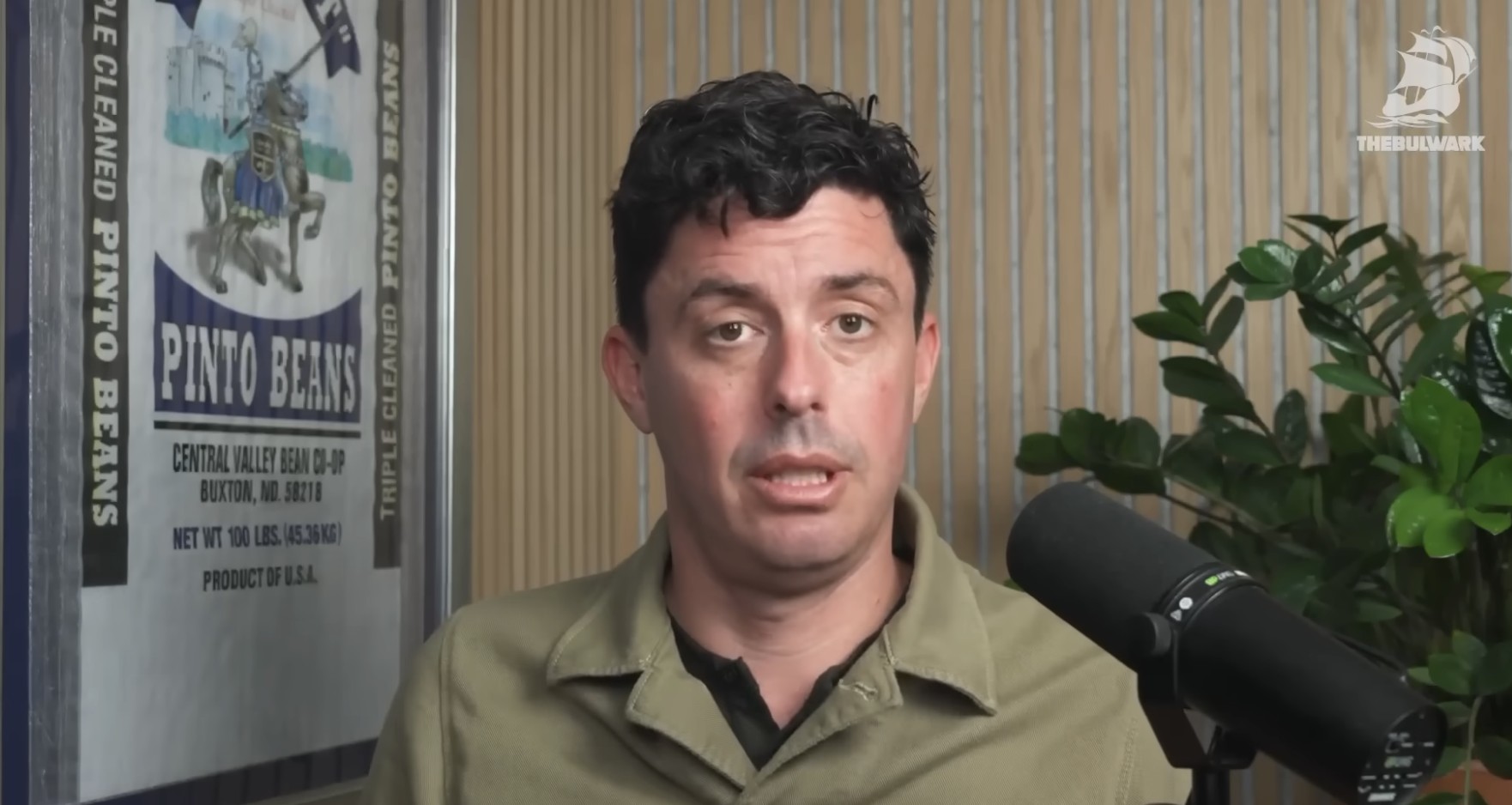
'The Bulwark types are indeed gaining momentum during Trump II.' Credit: The Bulwark/YouTube

'The Bulwark types are indeed gaining momentum during Trump II.' Credit: The Bulwark/YouTube

June 15 2026 - 7:00pm

The Bulwark‘s pitch, faithfully relayed in the Wall Street Journal‘s recent profile, is that it has built a popular refuge for the “politically homeless” — noble exiles cast out of a politics that lost its mind to MAGA or Zohran Mamdani. The site was started in 2018 by Bill Kristol, Charlie Sykes, and Sarah Longwell after Kristol’s Weekly Standard was shut down.

At first, the publication was basically a lifeboat for anti-Trump Republicans: former Reaganites, Bush veterans, neocons, and conservative pundits who had discovered that the GOP base no longer wanted what they were selling. But over the last eight years, the Bulwark has evolved into a cross-partisan media hub for the technocratic professional class in both parties. It’s a niche that’s been very good business recently: a million-odd Substack subscribers, talent poached from the legacy press, and $20 million+ in annual revenue.

Now the anti-Trump establishment Right and the center-left media world are beginning to congeal into a more self-conscious political formation, becoming something like the anti-populist center. Next month, that same group will descend on DC for a kind of Woodstock for lanyard-wearers — the sort of people who ask follow-up questions during the Q&A. It’s called LibCon 2026: two days at the Watergate Hotel in DC under the gloriously self-serious banner of “The Reconstruction Coalition”.

LibCon organizers say that this year, they are “catalyzing a new political alignment,” one determined to defeat authoritarianism and undergird an increasingly fragile democracy. But there’s hardly anyone new in the speaker list, which reads like the grand merger of the anti-Trump establishment under one chandelier: the aforementioned Bulwark figures; David French and Ezra Klein from the New York Times; Anne Applebaum and Adam Serwer from the Atlantic; and various lawyers, professors, and professional guardians of the liberal institutional order. Presiding over all of it is Francis Fukuyama to mourn the end of the End of History, 10 years later.

Sound familiar? What is being formed here is a reunion of the old governing class after its two halves were briefly separated by the unpleasantness of the Trump years. A mix of Bush and Obama people and Clintonites and the neocons, the liberal hawks and the market-friendly conservatives, the Atlantic essayists and the Cato deregulators, the democracy nonprofits and the former GOP consultants have all discovered that, beneath their old partisan hostility, they shared a deeper civilizational bond: they all hate populism.

Trump has made them realize that the great divide in American politics is not really Left versus Right, or even Democrat versus Republican, but respectable versus vulgar, institutional versus insurgent, credentialed versus pitchfork. They think politics should be returned to the adults. The adults, naturally, are them.

There is a comic quality to this. The people who helped build the pre-Trump consensus have reassembled to save the country from the wreckage it left behind. Populism did not simply fall from the sky wearing a red hat; it grew out of institutional and elite failure, deindustrialization, endless war, cultural fragmentation, financial crisis, opioid ruin, and the slow-motion collapse of any shared confidence that the people in charge knew what they were doing.

It’s true that the Bulwark types are indeed gaining momentum during Trump II. The President has given centrism something it never had before: drama, a villain, a sense of apocalypse. The center no longer has to defend itself as moderation; it’s rebranded as the last barricade before authoritarianism. But politically homeless? It’s a flattering self-image, but the Bulwark isn’t really a safe space for ideological orphans; it’s new paint on an old clubhouse for the intellectual wing of the establishment, one with a single-minded, pathological hatred for Trump.

Ryan Zickgraf is a columnist for UnHerd, based in Pennsylvania.

ryan_zickgraf

China is threatening America in the AI race

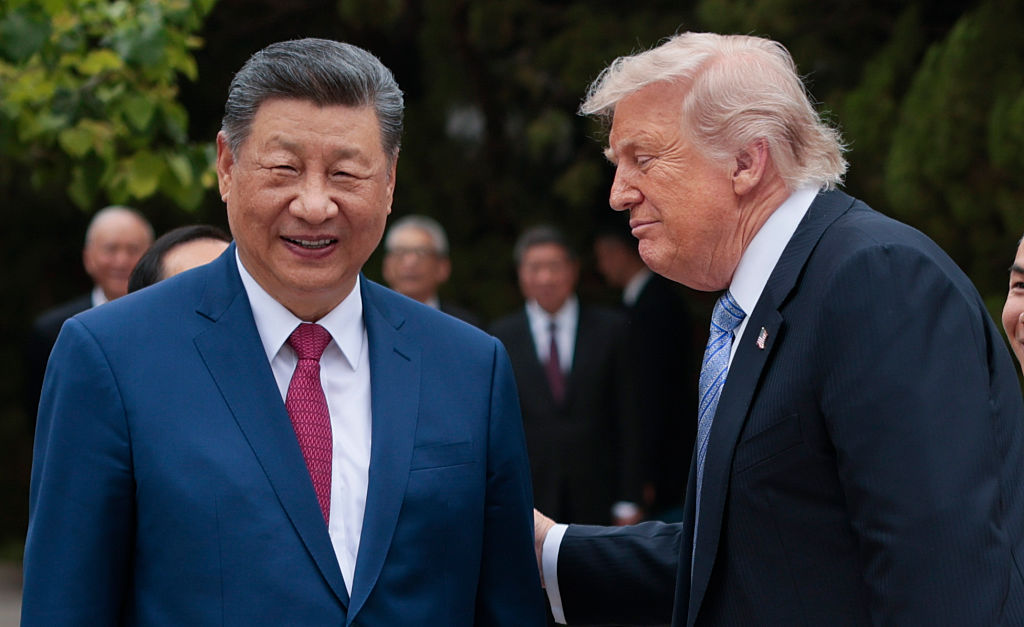
Reports sugget Zhipu AI  has released a new model that can rival leading US systems. Credit: Getty

Reports sugget Zhipu AI has released a new model that can rival leading US systems. Credit: Getty

July 1 2026 - 10:18am

China is trying to catch up with America on artificial intelligence. The Wall Street Journal has reported that Zhipu AI — one of China’s six “AI tiger” LLMs — has released a new model that can rival leading US systems, including Anthropic’s Mythos, in cybersecurity tasks such as pinpointing security bugs. While this marks a milestone in China’s drive to catch up with Western AI capabilities, strong performance on a single benchmark does not mean it has taken the lead. Chinese models still lag behind their Western counterparts in broader capabilities, such as autonomous operation. Skepticism is therefore warranted before resorting to hysterical conclusions, but complacency about the geopolitical implications of China’s AI advances would be an even greater mistake.

On the infrastructure side, Chinese AI is still constrained by access to advanced chips, with American labs way ahead in computing capacity as well as investment. Analysis from earlier this year suggests that Chinese models are likely to be at least a few months behind those in the US. But they are still continuing to make progress, or that the geopolitical importance of AI will be decided only by whose LLM has ventured deeper into the technological frontier. The practical applications of AI, countries’ to capture foreign markets, and the application of AI into the real economy will matter just as much.

Here, China may hold an advantage. As with its dominance across many critical supply chains, Beijing may not need to produce the most advanced AI systems — only those that are affordable and widely deployable. In doing so, it could consolidate global influence by supplying functional, low-cost AI at scale.

Beijing seems to be pursuing exactly that path, developing an AI “open-source” strategy that offers affordable, widely available AI models for companies and individuals to use and modify as they wish. The production of the DeepSeek AI model, which matched the performance of Silicon Valley tools such as ChatGPT at a fraction of the cost for users, created goodwill among Chinese models with developers.

The four most popular models on OpenRouter, an AI hardware platform for developers, are now all Chinese. The goal for China is not only to win the frontier-model race, but to make its systems the default layer of AI adoption across industries and global markets. For most economies, the choice is increasingly between an affordable tool they can deploy now and a more robust one that may be out of reach.

And while the countries adopting Chinese models may be exposed to political pressure and cyber threats from Beijing, safer and more capable alternatives matter little if they are unaffordable. American AI companies are already under pressure to monetize products whose operating costs are rising. If Chinese open-source models become the cheap default for startups, universities, governments and businesses across the developing world, then America’s AI lead will be eroded from below.

Perhaps more concerning for America in the long run is how AI can give Chinese manufacturing even more strength, through the ongoing integration of AI as a general-purpose technology. China’s new Five-Year Plan mentioned AI more than 50 times and includes an “AI+” action plan aimed at spreading AI across the economy.

Beijing has been pioneering automation of its critical infrastructure for years, with promising recent results in increasing warplane production capacity. In that regard, China’s open-model strategy and manufacturing dominance will reinforce each other. Cheap, adaptable models accelerate deployment across the real economy while those deployments generate real-world data and use cases that can feed back into further model improvement.

The United States should not dismiss the importance of its lead in the AI race. That lead worries Beijing, not least because a more automated Chinese economy would also become more vulnerable to AI-generated cyber threats. But nor should Washington assume that China cannot catch up with American capabilities over time.

This AI competition represents part of a broader struggle over tech supply chains and geopolitical influence. Decisions over whether to adopt US or Chinese models could produce a more fragmented global reality, with different regions relying on different cloud providers, chips and security structures. The result will likely be a global economy which is divided into competing spheres, rather than one which produces a single winner.


Miquel Vila is a political and geopolitical risk consultant focusing on industrial strategy, critical infrastructure and global supply chains.

miquelvilam