



X Close

Iran deal should finally get America out of the Middle East

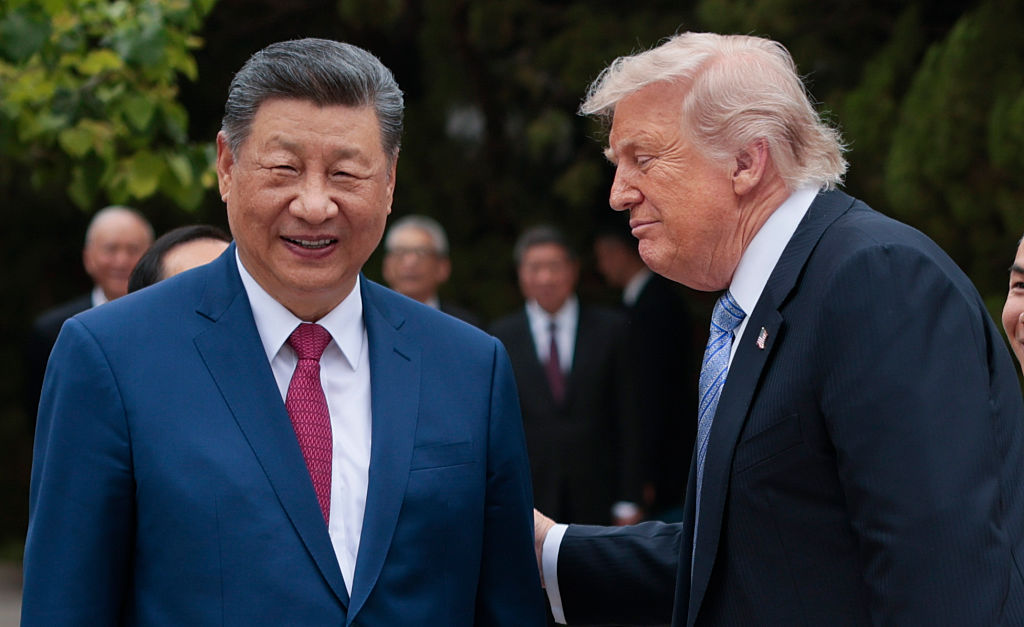
Trump announced the peace deal last night, but it will be signed with Iran on Friday. Credit: Getty

Trump announced the peace deal last night, but it will be signed with Iran on Friday. Credit: Getty

June 15 2026 - 12:43pm

America has been trying — and failing — to get out of the Middle East ever since Barack Obama’s first term. Now, thanks to President Trump’s ill-conceived Iran war and the deal that’s poised to settle it, which was announced overnight, Washington will finally get to reduce its footprint in a region that is of secondary importance (at best) for the world’s number-one net energy exporter.

That’s the long-term implication of the news that American and Iranian negotiators have almost finalized a memorandum of understanding to be signed later this week in Switzerland. Paradoxically, it came about as a result of the very military operation long pushed by American, Israeli, and Gulf hawks — the groups, in other words, that have the most to lose from retrenchment.

Keenly aware of the American public’s fatigue with the Middle East — and of the growing, bipartisan unpopularity of the Jewish state — the hawks pressed and pressed for an operation that would dramatically weaken the Islamic Republic, maybe even overthrow it. The ambiguity of the goals, reflected in the Trump administration’s ever-shifting accounts of the war aims, was a product of this “let’s-see-what-we-can-get” approach.

But as we now know, the pro-war voices led by Benjamin Netanyahu based their analysis on a picture that underestimated the resilience of the Tehran regime, both in terms of military capacity and its popular foundations in Iranian society. This prompted some skepticism within the Trump administration — including, we now know, from Secretary of State Marco Rubio — but the President went ahead anyway.

A real regime-change operation in Iran — a nation of 90 million people, with an area nearly four times the size of Iraq — would have required a ground deployment of half a million troops. That was never going to happen, especially in a war that was unpopular from the get-go.

Almost immediately, the flawed analysis revealed itself in setbacks. Sounding surprisingly Bushian, Trump pledged to put Iran’s “destiny” back in the hands of its people. But no popular uprising materialized. Instead, getting bombed prompted an outpouring of anti-American sentiment on the streets of Tehran and other major cities. A cockamamie idea about “arming the Kurds” — a separatist effort in tension with the nationalist dreams of the exiled opposition led by Reza Pahlavi — likewise came to nothing.

With the supreme leader, Ali Khamenei, assassinated, the Islamic Revolutionary Guards Corps executed a defensive strategy that the group had gamed out going back to the Nineties. Faced with overwhelming American air superiority, the IRGC had long taught its officers that Iran’s best chance was to drag out any conflict, shift it to a maritime front, cause chaos for America’s Persian Gulf allies, and close the Strait of Hormuz. This would then inflict economic pain on Wall Street and on American consumers.

And that was it. The Iranian regime was awakened to a potency that it was formerly only latently aware of. And as a tenuous ceasefire takes hold, there is no chance of the Trump administration extracting through diplomacy and a blockade what it couldn’t win on the battlefield. While the terms of the final settlement are still unclear, it seems certain that the mullahs will extract some sort of payday, hold on to their enriched uranium, and, most importantly, hold on to their regime.

America might maintain its battered bases in the region, but no one outside of the ultra-hawkish think tanks and magazines in DC is prepared for a repeat. Thus, the United States will have come to recognize Iran in its current form as a permanent fixture of the Middle East: a state with interests and strategic imperatives that transcend ideology. That could be the beginning of the end for America’s whole reason for being in the Middle East.


Sohrab Ahmari is the US editor of UnHerd and the author, most recently, of Tyranny, Inc: How Private Power Crushed American Liberty — and What To Do About It

SohrabAhmari

China is threatening America in the AI race

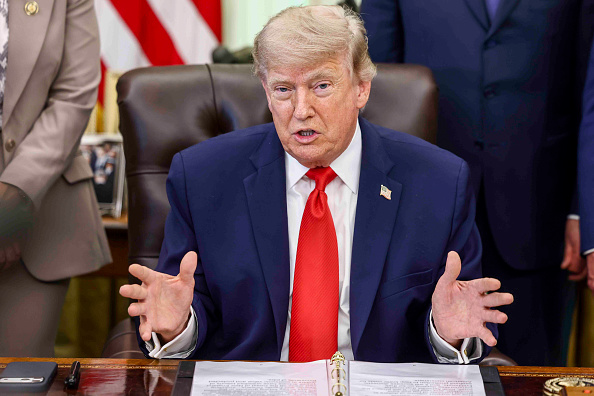
Reports sugget Zhipu AI  has released a new model that can rival leading US systems. Credit: Getty

Reports sugget Zhipu AI has released a new model that can rival leading US systems. Credit: Getty

July 1 2026 - 10:18am

China is trying to catch up with America on artificial intelligence. The Wall Street Journal has reported that Zhipu AI — one of China’s six “AI tiger” LLMs — has released a new model that can rival leading US systems, including Anthropic’s Mythos, in cybersecurity tasks such as pinpointing security bugs. While this marks a milestone in China’s drive to catch up with Western AI capabilities, strong performance on a single benchmark does not mean it has taken the lead. Chinese models still lag behind their Western counterparts in broader capabilities, such as autonomous operation. Skepticism is therefore warranted before resorting to hysterical conclusions, but complacency about the geopolitical implications of China’s AI advances would be an even greater mistake.

On the infrastructure side, Chinese AI is still constrained by access to advanced chips, with American labs way ahead in computing capacity as well as investment. Analysis from earlier this year suggests that Chinese models are likely to be at least a few months behind those in the US. But they are still continuing to make progress, or that the geopolitical importance of AI will be decided only by whose LLM has ventured deeper into the technological frontier. The practical applications of AI, countries’ to capture foreign markets, and the application of AI into the real economy will matter just as much.

Here, China may hold an advantage. As with its dominance across many critical supply chains, Beijing may not need to produce the most advanced AI systems — only those that are affordable and widely deployable. In doing so, it could consolidate global influence by supplying functional, low-cost AI at scale.

Beijing seems to be pursuing exactly that path, developing an AI “open-source” strategy that offers affordable, widely available AI models for companies and individuals to use and modify as they wish. The production of the DeepSeek AI model, which matched the performance of Silicon Valley tools such as ChatGPT at a fraction of the cost for users, created goodwill among Chinese models with developers.

The four most popular models on OpenRouter, an AI hardware platform for developers, are now all Chinese. The goal for China is not only to win the frontier-model race, but to make its systems the default layer of AI adoption across industries and global markets. For most economies, the choice is increasingly between an affordable tool they can deploy now and a more robust one that may be out of reach.

And while the countries adopting Chinese models may be exposed to political pressure and cyber threats from Beijing, safer and more capable alternatives matter little if they are unaffordable. American AI companies are already under pressure to monetize products whose operating costs are rising. If Chinese open-source models become the cheap default for startups, universities, governments and businesses across the developing world, then America’s AI lead will be eroded from below.

Perhaps more concerning for America in the long run is how AI can give Chinese manufacturing even more strength, through the ongoing integration of AI as a general-purpose technology. China’s new Five-Year Plan mentioned AI more than 50 times and includes an “AI+” action plan aimed at spreading AI across the economy.

Beijing has been pioneering automation of its critical infrastructure for years, with promising recent results in increasing warplane production capacity. In that regard, China’s open-model strategy and manufacturing dominance will reinforce each other. Cheap, adaptable models accelerate deployment across the real economy while those deployments generate real-world data and use cases that can feed back into further model improvement.

The United States should not dismiss the importance of its lead in the AI race. That lead worries Beijing, not least because a more automated Chinese economy would also become more vulnerable to AI-generated cyber threats. But nor should Washington assume that China cannot catch up with American capabilities over time.

This AI competition represents part of a broader struggle over tech supply chains and geopolitical influence. Decisions over whether to adopt US or Chinese models could produce a more fragmented global reality, with different regions relying on different cloud providers, chips and security structures. The result will likely be a global economy which is divided into competing spheres, rather than one which produces a single winner.


Miquel Vila is a political and geopolitical risk consultant focusing on industrial strategy, critical infrastructure and global supply chains.

miquelvilam